Yen Slides Below 5 Per Dollar as US-Japan Intervention Gains Evaporate
SingTao · 1 SOURCESabout 1 hour ago2 MIN
Summary
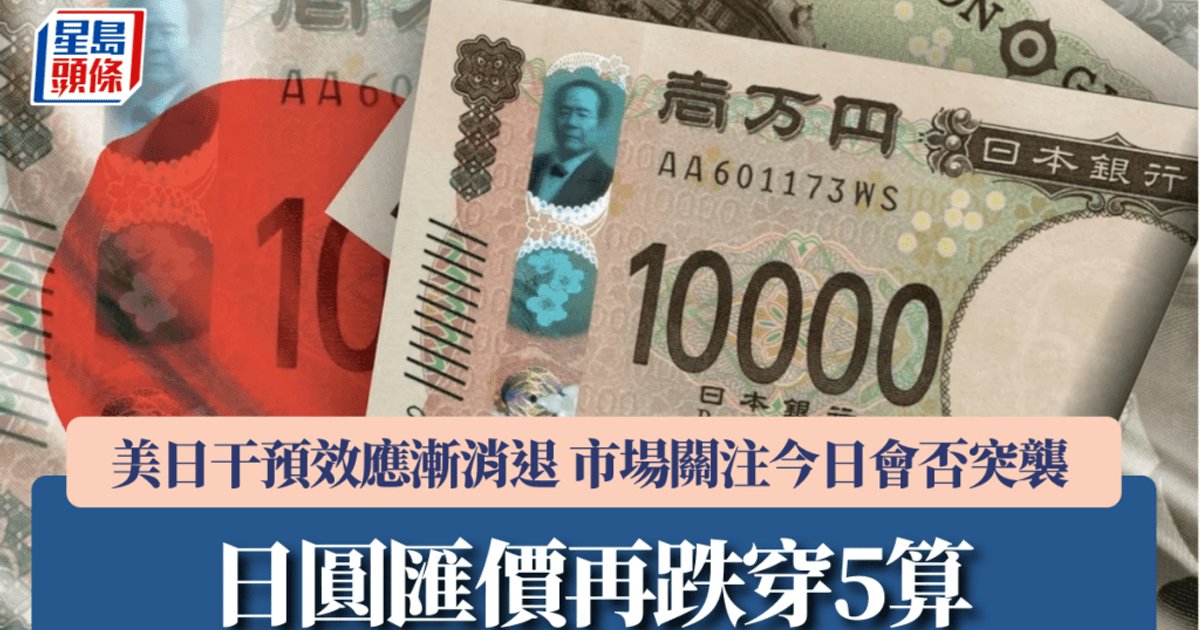
The Japanese yen has slipped below the 5 level against the Hong Kong dollar again, with the latest exchange rate hovering around 4.92 . According to Bloomberg, the strong rebound the yen experienced following coordinated US-Japan intervention has now given back more than half its gains, as the dollar-yen rate fell back to 159.29, signaling a resurgence of bearish sentiment toward the yen . Market participants are now closely monitoring whether authorities will launch another surprise intervention, with speculation that they may strike during Japan's holiday on August 11 when trading volume is typically lighter .
Key Points
- The yen plunged to 164 per dollar in late July, its weakest level in nearly 40 years, prompting the first US-Japan joint currency intervention since 1998 .
- Japan deployed approximately $87 billion over just two days on July 30-31, successfully pushing the yen to around 155 .
- Goldman Sachs strategists report that the intervention failed to alter the long-term depreciation trajectory of the yen .
- Bank of Japan Governor Kazuo Ueda signaled hawkish intentions at the July meeting, with traders now pricing a 63% probability of a September rate hike .
- State Street strategist Lee Ferridge warns that without fresh intervention, the yen will continue weakening as market focus returns to the substantial US-Japan interest rate gap .
Why It Matters
The yen's renewed weakness highlights the limited effectiveness of unilateral or bilateral currency interventions against fundamental macroeconomic forces. With the Bank of Japan potentially raising rates in September, Hong Kong investors holding yen-denominated assets face both currency depreciation risk and uncertainty about whether monetary policy tightening will be aggressive enough to reverse the trend.
The yen's renewed weakness highlights the limited effectiveness of unilateral or bilateral currency interventions against fundamental macroeconomic forces. With the Bank of Japan potentially raising rates in September, Hong Kong investors holding yen-denominated assets face both currency depreciation risk and uncertainty about whether monetary policy tightening will be aggressive enough to reverse the trend.