5.9 Earthquake Strikes Ibaraki, Tokyo Experiences First Major Tremor in 5 Years
SingTao · 1 SOURCESabout 1 hour ago2 MIN
Summary
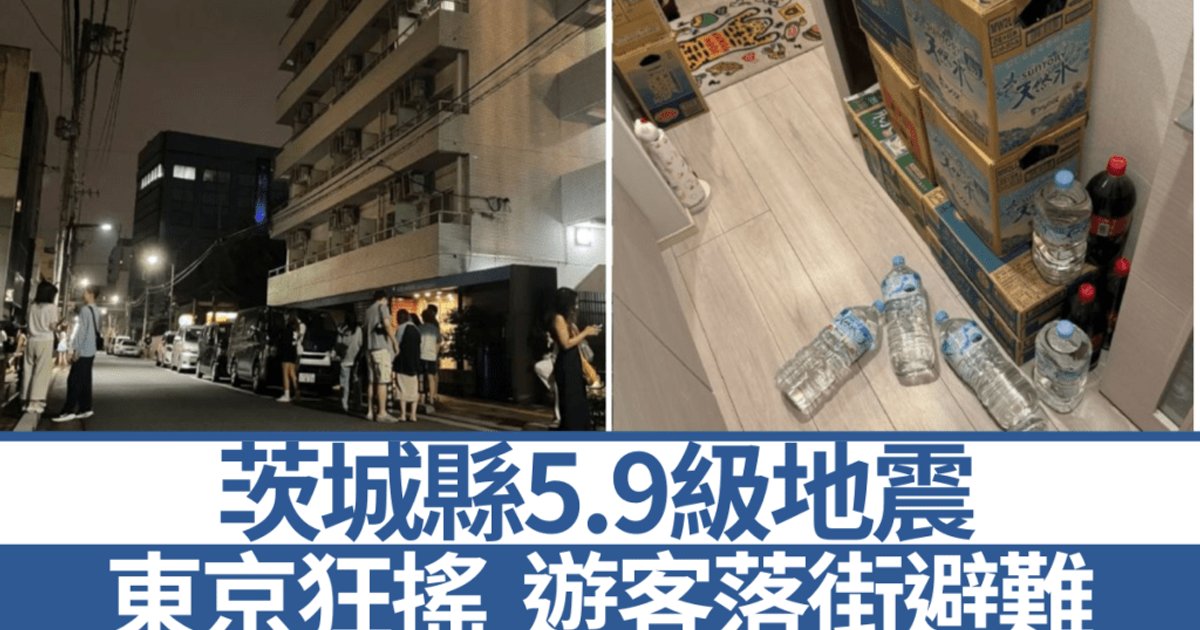
A 5.9-magnitude earthquake struck southern Ibaraki Prefecture at around 2 a.m. local time on January 23, causing intensity 5-weak shaking across multiple regions including Tokyo's 23 wards for the first time in nearly five years . The Japan Meteorological Agency has warned that similar-intensity tremors could occur over the next week, particularly within the next two to three days .
Key Points
- The earthquake occurred at approximately 2 a.m. on January 23 (1 a.m. Hong Kong time), with its epicenter in southern Ibaraki at a depth of 70 kilometers
- Intensity 5-weak was recorded in 17 administrative districts across Ibaraki, Saitama, Chiba, and Tokyo, affecting areas including Adachi Ward in Tokyo and cities such as Tsukuba, Koga, and Ryugasaki in Ibaraki
- Tokyo's 23 wards experienced their first intensity 5-weak shaking in nearly five years, with widespread reports of injuries, burst water pipes, water supply disruptions, and elevator entrapments
- The Adachi Fire Department responded to reports of glass-related injuries at approximately 3:30 a.m., while the Hanabatake, Shari, and Hirano districts experienced water outages
- JR East and the Tsukuba Express are conducting safety inspections on tracks and infrastructure, with potential service cancellations or delays from the first train of the day
Why It Matters
The earthquake's impact on Japan's densely populated capital region highlights the ongoing seismic risks in the Kanto area, prompting authorities to maintain heightened vigilance for aftershocks . For Hong Kong travellers planning visits to Japan, this event serves as a reminder to review emergency procedures and insurance coverage, as the Japan Meteorological Agency continues to monitor for potential subsequent tremors .
The earthquake's impact on Japan's densely populated capital region highlights the ongoing seismic risks in the Kanto area, prompting authorities to maintain heightened vigilance for aftershocks . For Hong Kong travellers planning visits to Japan, this event serves as a reminder to review emergency procedures and insurance coverage, as the Japan Meteorological Agency continues to monitor for potential subsequent tremors .