Over 20 Government Works Projects Deploy High-Efficiency Construction Robots
RTHK · 3 SOURCESabout 1 hour ago3 MIN
Summary
The Development Bureau announced that over 20 government works projects have already adopted high-efficiency construction robots following a December 2025 policy requiring their use across all suitable construction processes. Director of Development Hannah Loh stated in her blog that the initiative aims to enhance construction quality and improve workplace safety. The first batch of four robot categories includes remote-controlled tower cranes, welding robots, drilling robots and progress-monitoring drones, with plans to gradually expand to painting and handling robots.
Key Points
- Development Bureau Assistant Secretary (Planning Management) Lo Tsz-yan confirmed that over 20 government works projects are using the first batch of four high-efficiency construction robots
- The Civil Engineering and Development Department uses small drones at the Alderman Rural Housing Development in Eastern District to transport tools and materials, with each drone carrying approximately 60 kilograms
- At the Tsing Yi West Road site, remote-controlled compactors with smart compaction monitoring systems were deployed for filling work in a 30-meter-deep valley, marking Hong Kong's first such application
- The Architectural Services Department introduced indoor automatic spray painting and grinding robots at the Kwun Tong Integrated Development Project, achieving four times the efficiency of manual operation while simultaneously extracting dust
- The Drainage Services Department developed the 300-kilogram i-STAR robot for real-time inspection of cover plate damage, deformation and installation anomalies
- The Electrical and Mechanical Services Department collaborated with the University of Hong Kong and the Police Force to develop spherical robots capable of entering narrow spaces such as ventilation ducts, water pipes, underfloor areas and vehicle undersides
- The Water Supplies Department partnered with a technology company's robotics team to create the six-legged Smart Guard Dog for automated patrols at water treatment plants, equipped with high-resolution cameras, thermal imaging and gas sensors
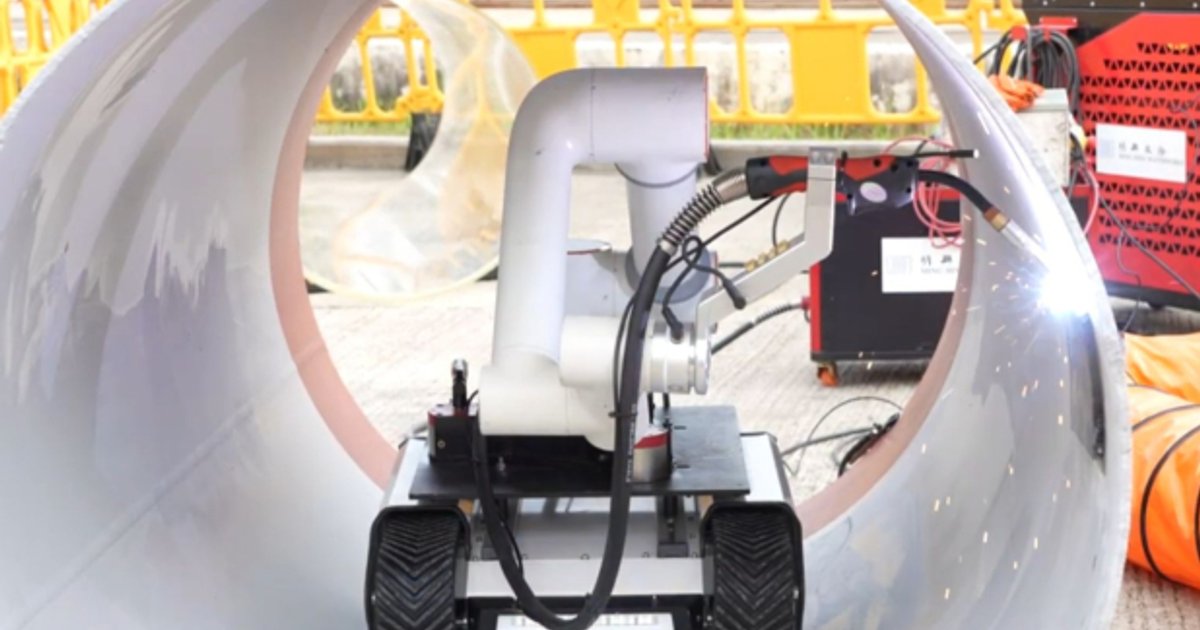
- The Water Supplies Department also co-developed the Smart Pipe Weld robot with an engineering company to perform precision welding inside pipes for accelerated water main repairs
Why It Matters
This policy marks a significant shift in Hong Kong's construction industry, potentially setting benchmarks for private sector adoption while addressing labor shortages and safety concerns. The Development Bureau's collaboration with the Hong Kong Institute of Construction to establish certification standards could position Hong Kong as a hub for construction technology, helping local and mainland robotics companies access global markets .
This policy marks a significant shift in Hong Kong's construction industry, potentially setting benchmarks for private sector adoption while addressing labor shortages and safety concerns. The Development Bureau's collaboration with the Hong Kong Institute of Construction to establish certification standards could position Hong Kong as a hub for construction technology, helping local and mainland robotics companies access global markets .