Mainland Tourist's Half-Price Cake Post Sparks Viral Hong Kong Social Gathering
SingTao · 1 SOURCESabout 1 hour ago2 MIN
Summary
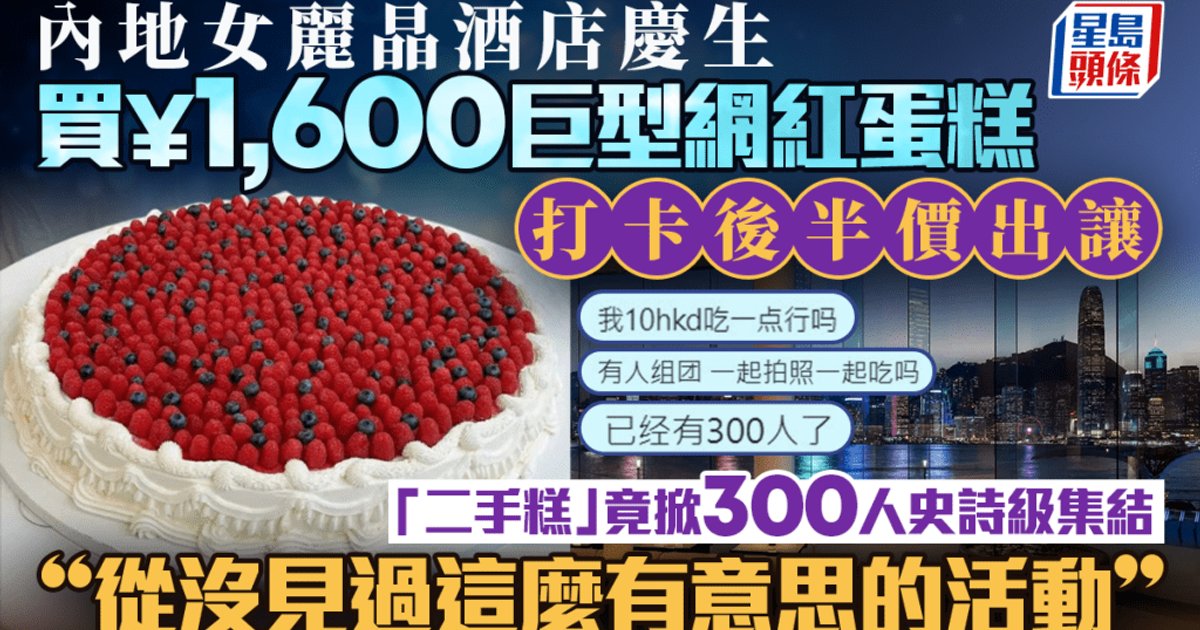
A mainland Chinese visitor sparked an unexpected social media frenzy in Hong Kong after purchasing an expensive raspberry cake specifically for a birthday photoshoot at The Regent Hong Kong, only to offer it for resale at half price afterward. The Xiaohongshu post quickly went viral, drawing hundreds of interested netizens who organized group purchases and even planned offline gatherings around the cake. The incident highlights how social media can transform simple second-hand transactions into community-building events, while raising questions about consumerism and food waste.
Key Points
- The 40-centimeter raspberry cake cost 1,600 yuan (approximately 2,200 yuan including 600 yuan cross-border delivery from Shenzhen), with the poster hoping to resell it for 800 yuan
- The original poster explained she was celebrating her birthday during a trip to Hong Kong with her mother and wanted a photo-worthy cake, but two people could not finish such a large dessert
- The Xiaohongshu post attracted approximately 300 netizens who joined a dedicated "cake group chat," with 60 people ultimately agreeing to pay and participate in the shared experience
- Netizens jokingly offered to take bites for just 10 or 20 Hong Kong dollars, while others questioned the logic of spending 2,200 yuan to photograph a cake before selling it
- The poster clarified that if the cake did not sell, she would invite anyone in Hong Kong on that day to enjoy the cake for free to avoid waste
Why It Matters
This incident reflects a broader trend among mainland tourists who prioritize Instagrammable experiences over material consumption, turning luxury purchases into social currency that can be shared and traded. For Hong Kong's hospitality and tourism industries, such viral moments represent both opportunities for visibility and questions about how to cater to visitors who view high-end hotels and products primarily as backdrop for content creation rather than as destinations or purchases in themselves .
This incident reflects a broader trend among mainland tourists who prioritize Instagrammable experiences over material consumption, turning luxury purchases into social currency that can be shared and traded. For Hong Kong's hospitality and tourism industries, such viral moments represent both opportunities for visibility and questions about how to cater to visitors who view high-end hotels and products primarily as backdrop for content creation rather than as destinations or purchases in themselves .