Viral Post Exposes 'Inhuman' Public Housing Layout in Tin Yiu Estate
SingTao · 1 SOURCESabout 1 hour ago6 MIN
Summary
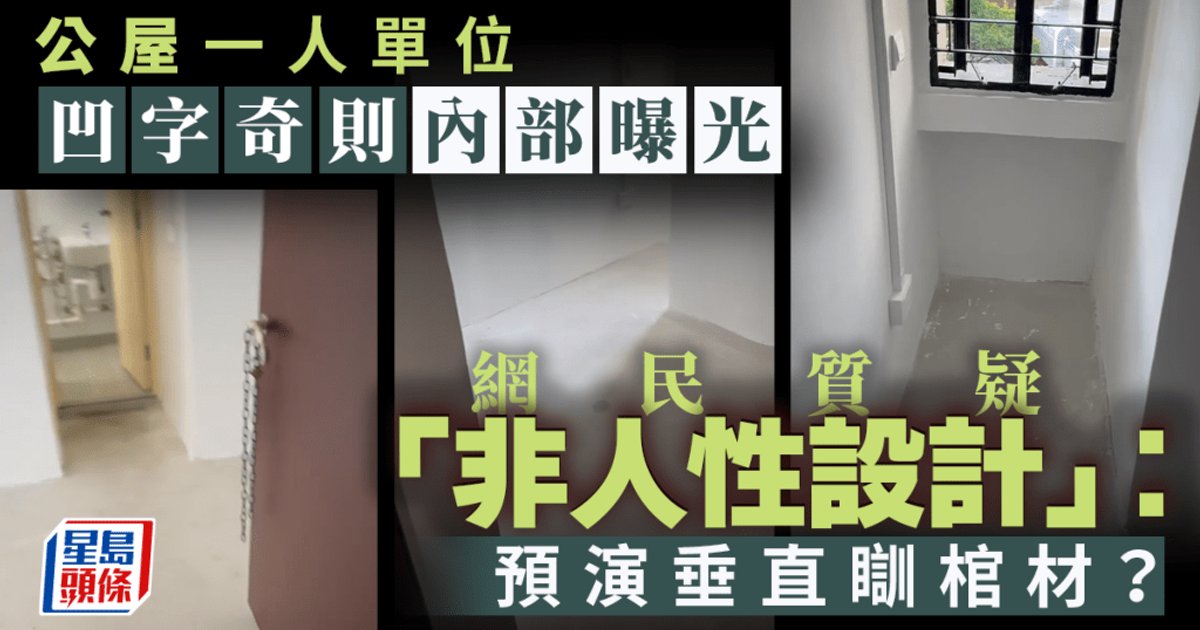
A video posted by a netizen exposing the interior of a uniquely designed one-person public housing unit in Tin Yiu Estate (天耀邨), Tin Shui Wai, has sparked massive online discussion over what many call an "inhumane" living arrangement. The concave-shaped (凹字) layout features a narrow corridor barely wide enough for one person to pass through, with the entrance positioned awkwardly in the recessed section. The unit, a converted subdivision from Y3/Y4 type buildings constructed in the early 1990s, has a nominal area of approximately 128 to 153 square feet but net usable space of only around 120 square feet. Netizens have flooded the comment section with dark humor about coffin-like sleeping arrangements, while others defend the unit as better than street sleeping or private subdivided flats. The Housing Department reportedly penalizes applicants who refuse such units by deducting one housing allocation chance, a policy many criticize as unfair.
Key Points
- Tin Yiu Estate is the first public housing development in Tin Shui Wai New Town, with tenants moving in from 1992 to early 1993, making the buildings over 30 years old
- The unusual concave layout results from the Housing Department splitting larger end-units into three or five smaller units to boost one-person housing supply in the late 1980s to early 1990s
- The unit's net usable space is approximately 120 square feet despite a nominal area of 128 to 153 square feet, with space fragmented by the entrance, corridors, and multiple door openings
- The narrow corridor on the left side of the living room ends at the only window, prompting netizens to joke about using it as a "confessional booth" or a space to "stare at the wall when feeling sad"
- Monthly rent is reportedly under HK$1,000, with netizens noting that private subdivided flats often cost HK$6,000 for similar or smaller space without private kitchen or bathroom facilities
Why It Matters
This viral case exposes systemic issues in Hong Kong's public housing allocation system, where residents face a difficult choice between accepting poorly designed units or losing allocation chances. The debate highlights the tension between housing supply targets and basic livability standards, particularly as Hong Kong continues to grapple with acute land and housing shortages. The Housing Department's practice of converting large units into cramped subdivisions reflects past policy decisions that continue to affect thousands of single applicants waiting for public housing today .
This viral case exposes systemic issues in Hong Kong's public housing allocation system, where residents face a difficult choice between accepting poorly designed units or losing allocation chances. The debate highlights the tension between housing supply targets and basic livability standards, particularly as Hong Kong continues to grapple with acute land and housing shortages. The Housing Department's practice of converting large units into cramped subdivisions reflects past policy decisions that continue to affect thousands of single applicants waiting for public housing today .