HKU Study: Esketamine for Treatment-Resistant Depression with Policy Optimization Could Enhance Cost-Effectiveness
Bastillepost · 1 SOURCESabout 1 hour ago2 MIN
Summary
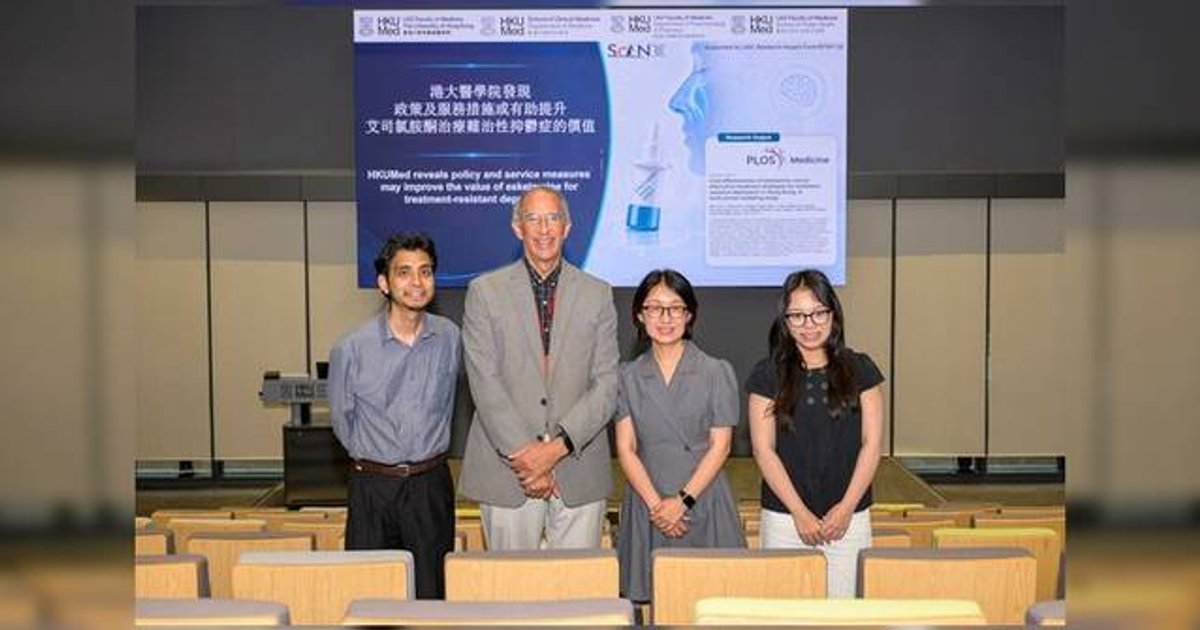
A landmark study led by the University of Hong Kong's Li Ka Shing Faculty of Medicine has found that esketamine nasal spray, when combined with strategic policy optimizations, could significantly enhance clinical outcomes and cost-effectiveness for treatment-resistant depression in Hong Kong. The research, conducted in collaboration with the Chinese University of Hong Kong, New York University, and Newcastle University, analyzed the drug's value using economic modeling over a five-year treatment horizon .
Key Points
- Esketamine nasal spray is currently approved in Hong Kong for treating adult patients with treatment-resistant depression, defined as inadequate response to at least two antidepressants .
- Using Markov cohort modeling, researchers compared esketamine plus antidepressant therapy against six third-line alternatives, finding patients gained 2.95 quality-adjusted life years (QALYs) over five years .
- The incremental cost per QALY gained with esketamine versus antidepressant combination therapy was approximately USD 274,000, though it showed better cost-effectiveness than repetitive transcranial magnetic stimulation and electroconvulsive therapy .
- Lead researcher Professor Xue Li emphasized that evaluating innovative medicines requires a holistic approach considering treatment efficacy, resource allocation, and long-term sustainability rather than focusing on clinical or economic factors alone .
- The SCAN-2030 project will launch the DECODE initiative, bringing together policymakers, healthcare professionals, patients, researchers, and industry representatives to define healthcare value and guide future funding decisions .
Why It Matters
For Hong Kong's public healthcare system facing mounting psychiatric service demands, this research provides evidence-based guidance on how to balance innovation with fiscal responsibility. The findings could inform policy reforms that expand access to breakthrough treatments for the most vulnerable patients while maintaining system sustainability.
For Hong Kong's public healthcare system facing mounting psychiatric service demands, this research provides evidence-based guidance on how to balance innovation with fiscal responsibility. The findings could inform policy reforms that expand access to breakthrough treatments for the most vulnerable patients while maintaining system sustainability.