Hong Kong Braces as Observatory Warns of Possible Low Pressure System Next Week
HK01 · 1 SOURCESabout 1 hour ago6 MIN
Summary
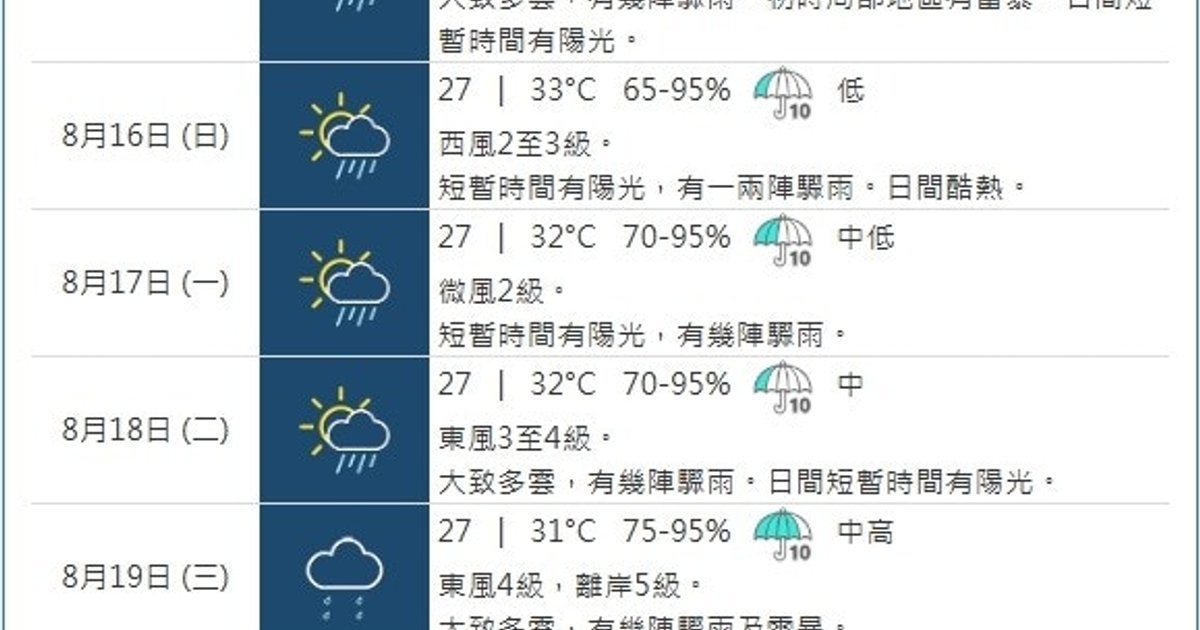
The Hong Kong Observatory issued a weather advisory warning that a broad low pressure trough will influence the northern South China Sea and waters east of Taiwan early next week, gradually approaching the Guangdong coast by mid-week. The trough may spawn a low pressure area with the potential to develop into a tropical cyclone. Multiple AI forecast systems, including AIFS, Pangu, WindCrow, and Fuxi, predict low pressure formation approximately 400 kilometers southwest of Hong Kong. While most models suggest the system will not strengthen into a tropical depression, the Fuxi model indicates possible intensification as it tracks toward Hainan Island and the Gulf of Beibu. Current extreme heat conditions will ease slightly, with today's maximum temperature around 34 degrees Celsius in urban areas.
Key Points
- Observatory predicts broad low pressure trough affecting South China Sea early next week, potentially spawning a low pressure area near Guangdong coast
- Thursday and Friday (June 20-21) expected to bring east to southeast winds force 4-5, scattered showers, and squally thunderstorms
- AI forecast system Fuxi predicts tropical depression forming 400km southwest of Hong Kong, tracking toward Hainan Island and Gulf of Beibu
- AIFS predicts low pressure area gradually approaching within 400km of Hong Kong with increased wind strength mid-week
- Current extreme heat eases slightly with today reaching maximum 34 degrees Celsius in urban areas, 1-2 degrees higher in New Territories
- Multiple AI systems (AIFS, Pangu, WindCrow) forecast low pressure area formation but unlikely to develop into tropical cyclone
- Tropical cyclone Romele (浪卡) located 1,510km southeast of Tokyo, predicted to move northeast away from Japan
Why It Matters
The potential development of a low pressure system comes during Hong Kong's summer typhoon season, when such weather disturbances can rapidly intensify and bring significant disruption to the city. Even without full tropical cyclone formation, the associated weather deterioration—stronger winds, heavy rain, and thunderstorms—could affect outdoor activities, transportation, and daily routines for Hong Kong's 7.5 million residents .
The potential development of a low pressure system comes during Hong Kong's summer typhoon season, when such weather disturbances can rapidly intensify and bring significant disruption to the city. Even without full tropical cyclone formation, the associated weather deterioration—stronger winds, heavy rain, and thunderstorms—could affect outdoor activities, transportation, and daily routines for Hong Kong's 7.5 million residents .