World Humanoid Robot Games Returns to Beijing with Record 2,056 Competitors
SingTao · 2 SOURCESabout 1 hour ago3 MIN
Summary
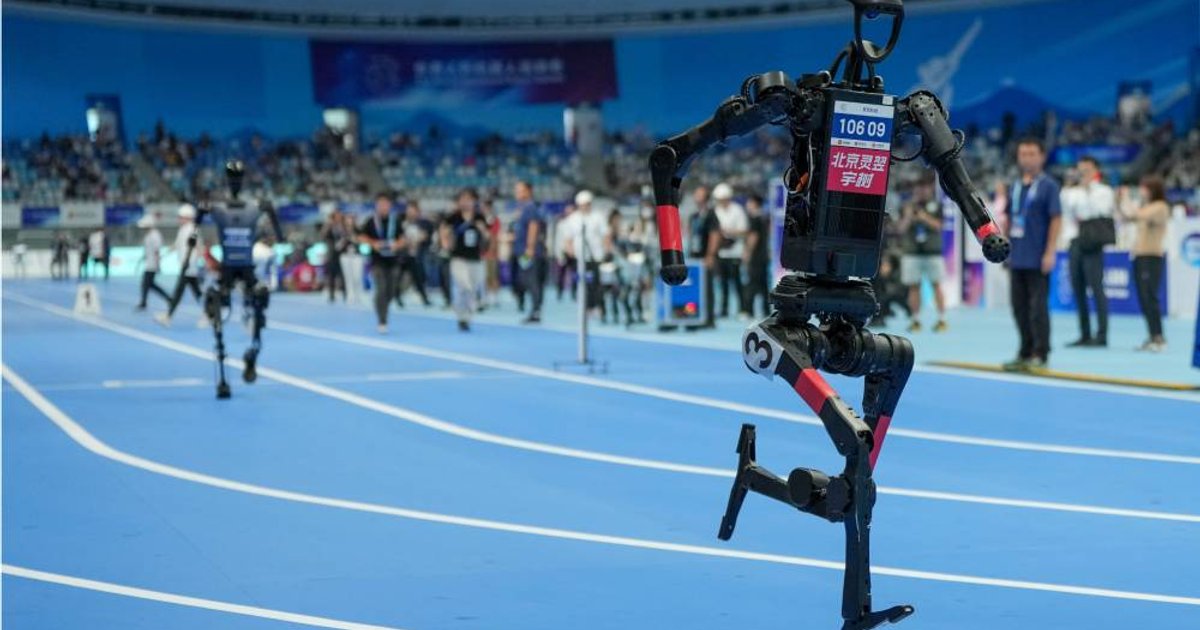
The second World Humanoid Robot Games is set to kick off on February 22 at Beijing's National Speed Skating Oval, marking a substantial expansion from its inaugural event with 2,056 robots from 666 teams across 16 countries competing in 1,301 matches across 51 events . The competition has introduced martial arts and dance to its competitive categories while expanding scenario-based events from 6 to 21, covering nine real-world settings including households, hotels, industry, and emergency rescue operations . Competition standards have been dramatically raised, with the 100-metre race time limit reduced from three minutes to one minute and the 1,500-metre from 40 minutes to 15 minutes, while all track and competitive events except obstacle races must now be completed fully autonomously . Chinese entries comprise 1,975 robots from 641 teams representing 157 companies and 27 universities, alongside international participants from the United States, Germany, Japan, and Brazil . The event signals a maturation of humanoid robotics technology, pushing machines from "completing is winning" to proving genuine athletic and functional capabilities .
Key Points
- The tournament opens February 22 at the National Speed Skating Oval in Beijing with 2,056 robots from 666 teams across 16 countries competing
- 51 events with 1,301 matches span competitive categories (martial arts, dance) and scenario-based events covering nine real-world settings
- Race time limits cut dramatically: 100 metres reduced from 3 minutes to 1 minute; 1,500 metres from 40 minutes to 15 minutes
- All track and competitive events except 100m and 400m obstacle races require fully autonomous robot completion
- Chinese participation includes 1,975 robots from 641 teams representing 157 companies and 27 universities, with 100 additional judges from last year
Why It Matters
The Games showcase humanoid robotics advancing from demonstration projects to practical applications, with expanded scenario-based competitions in household, industrial, and emergency rescue settings reflecting real-world utility . Hong Kong's position as a regional technology hub makes this significant, as the city's robotics sector can draw inspiration from competition standards that are rapidly elevating global benchmarks . The increased autonomy requirements and stricter performance metrics indicate the industry is maturing beyond basic locomotion toward sophisticated decision-making and functional versatility .
The Games showcase humanoid robotics advancing from demonstration projects to practical applications, with expanded scenario-based competitions in household, industrial, and emergency rescue settings reflecting real-world utility . Hong Kong's position as a regional technology hub makes this significant, as the city's robotics sector can draw inspiration from competition standards that are rapidly elevating global benchmarks . The increased autonomy requirements and stricter performance metrics indicate the industry is maturing beyond basic locomotion toward sophisticated decision-making and functional versatility .