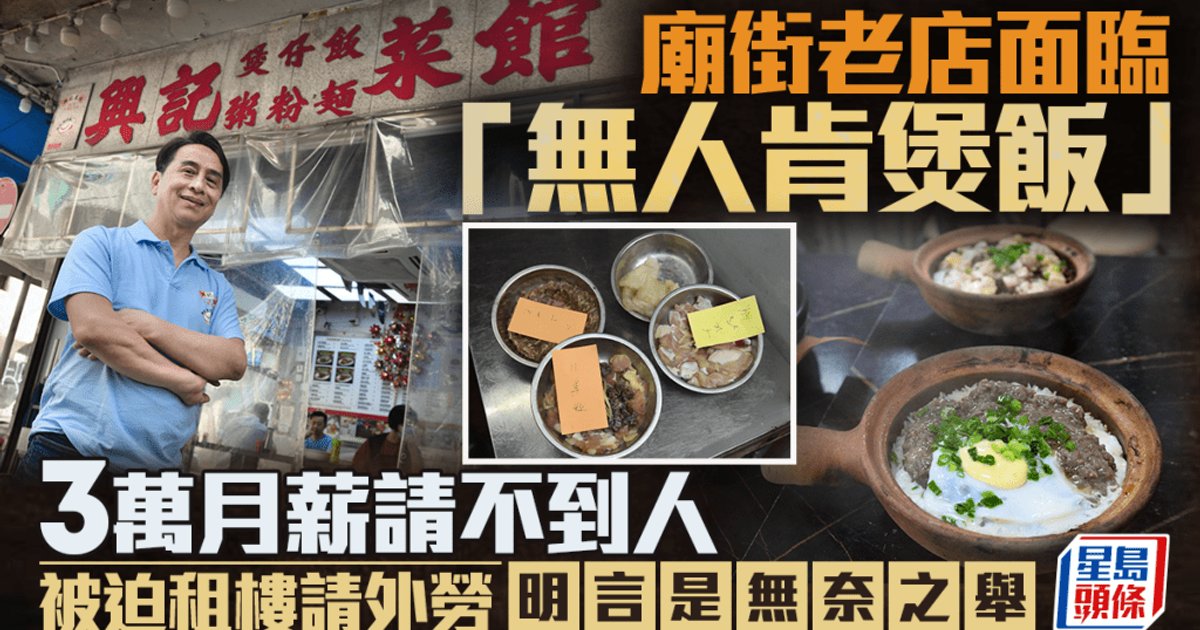
Iconic Temple Street Claypot Rice Shop Struggles to Hire Locals Despite HK$30,000 Monthly Salary
SingTao · 1 SOURCESabout 1 hour ago5 MIN
Summary
Hing Kee (興記菜館), a 44-year-old claypot rice institution on Temple Street with five branches, is facing a severe labor shortage as young Hong Kong workers refuse kitchen jobs despite a monthly salary offer exceeding HK$30,000. Second-generation owner Chan Kwok-fai has been forced to hire mainland workers and rent accommodation for them, calling it a last resort. The restaurant's daily output has dropped from over 2,000 claypot rice servings to several hundred fewer due to staffing constraints. With the founder generation aging and no clear successor in the family, the future of this traditional establishment remains uncertain.
Key Points
- Hing Kee started in Temple Street 44 years ago with claypot rice priced at HK$8.50 per serving; the cheapest option now costs HK$75
- Owner Chan Kwok-fai offered over HK$30,000 monthly salary but attracted zero local applicants, with three hired workers quitting within a week
- Young workers prefer Western kitchens or cha chaan teng (Hong Kong-style cafes) over traditional Chinese kitchens, citing intense heat and 10+ hour shifts
- The restaurant now hires mainland workers at approximately HK$9,600 in training levies per worker over two years, plus HK$25,000 monthly for shared dormitory accommodation
- The most senior employee has worked at Hing Kee for over 40 years, while the youngest remaining chef has been there for over a decade
Why It Matters
This labor crisis reflects a broader structural problem facing Hong Kong's traditional food and beverage industry, where demanding working conditions and abundant job alternatives deter young people from pursuing culinary trades . The situation creates a vicious cycle: local workers leave for easier jobs, businesses rely on imported labor whose wages flow back to the mainland, and authentic local food culture gradually disappears from Hong Kong's streets .
This labor crisis reflects a broader structural problem facing Hong Kong's traditional food and beverage industry, where demanding working conditions and abundant job alternatives deter young people from pursuing culinary trades . The situation creates a vicious cycle: local workers leave for easier jobs, businesses rely on imported labor whose wages flow back to the mainland, and authentic local food culture gradually disappears from Hong Kong's streets .