Third Educational Trip to Xinjiang Explores Historical Significance of 'Old Land Newly Returned'
SingTao · 1 SOURCESabout 1 hour ago7 MIN
Summary
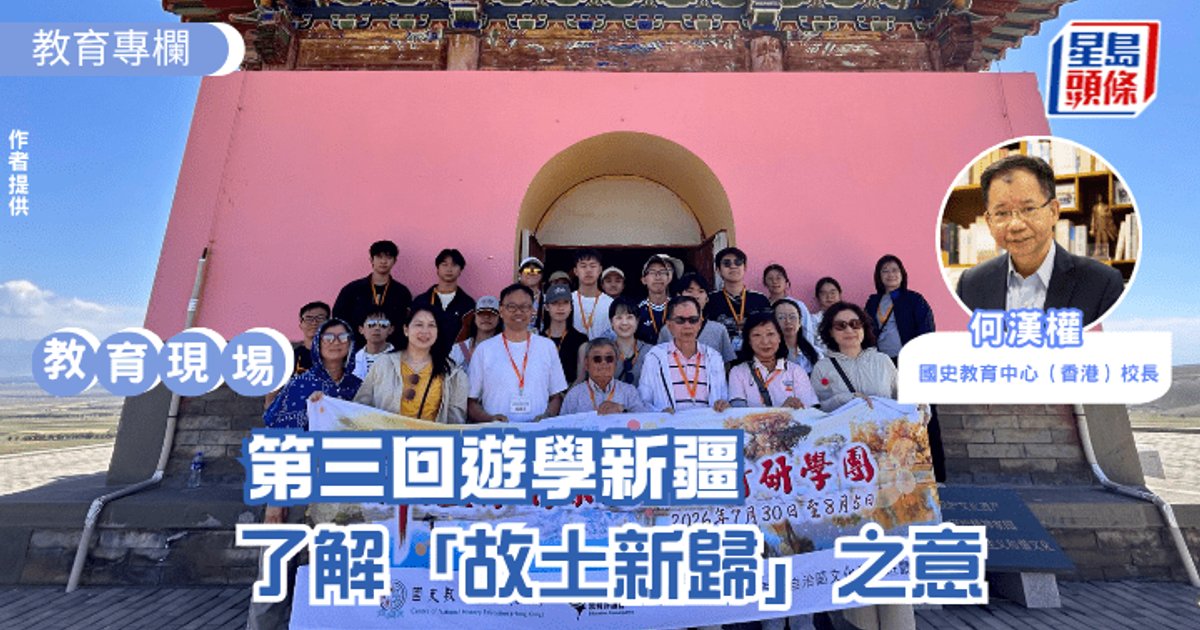
Ho Hon Kuen, principal of the National History Education Center (Hong Kong), has completed his third educational trip to Xinjiang within two years. The most recent journey was a seven-day "Xinjiang Lin Zexu Footprint Tour" study tour, jointly organized by the Education Critique Association and the National History Education Center, with support from the Xinjiang Culture and Tourism Department . Professor Ding Xinbao accompanied the group as academic lecturer, providing detailed historical interpretations throughout the journey .
The tour began at the Xinjiang Uyghur Autonomous Region Museum, where participants traced the region's development from the Stone Age through the Pre-Qin period, Han Dynasty, Wei-Jin Southern and Northern Dynasties, to the Tang Dynasty . Professor Ding explained the formation of Xinjiang's diverse ethnic groups and religious cultures, demonstrating the long-standing integration of Silk Road civilizations .
Participants visited significant infrastructure including the Guozigou Bridge, which cost 2.39 billion RMB, a location historically significant as the starting point of Genghis Khan's westward military campaigns . Professor Ding analyzed the Mongol conquests from a civilization progression perspective, noting how such military expansions damaged cultural development .
The tour also examined Lin Zexu's legacy in Xinjiang, including his water conservation work at the Kashi River Dragon Mouth and the Lin Gong Canal (Huangqu), despite his exile . Professor Ding recounted the famous "Xiangjiang Night Talk" between Lin Zexu and Zuo Zongtang, which laid the foundation for later efforts to recover Xinjiang .
Key Points
- The seven-day "Xinjiang Lin Zexu Footprint Tour" was organized by the Education Critique Association and National History Education Center
- The Xinjiang Uyghur Autonomous Region Museum visit traced regional development from the Stone Age through the Tang Dynasty
- Guozigou Bridge, constructed at a cost of 2.39 billion RMB, holds historical significance as Genghis Khan's westward campaign origin point
- In 1884, the Qing government named the region "Xinjiang" meaning "old land newly returned" to reflect its restoration to Chinese control
- Today, China maintains friendly relations with Kazakhstan, with open borders and shared草原 landscapes in border regions
Why It Matters
The educational journey provides Hong Kong students and educators with firsthand understanding of Xinjiang's historical ties to China, countering one-sided narratives about the region . For Hong Kong's national education curriculum, these historical insights into how frontier territories were governed and integrated offer valuable perspectives on state-building and territorial integrity .
The educational journey provides Hong Kong students and educators with firsthand understanding of Xinjiang's historical ties to China, countering one-sided narratives about the region . For Hong Kong's national education curriculum, these historical insights into how frontier territories were governed and integrated offer valuable perspectives on state-building and territorial integrity .