Chinese Robots Excel at Tennis and Track at World Humanoid Robot Games
SCMP · 2 SOURCESabout 1 hour ago2 MIN
Summary
The second World Humanoid Robot Games officially opened on Saturday evening at Beijing's National Speed Skating Oval, the venue used for the 2022 Winter Olympics speed skating events. The five-day event, which features 51 events and 1,301 matches, has brought together more than 600 teams and 2,056 humanoid robots from around the world to compete in various sports disciplines. A groundbreaking demonstration saw the world's first fully autonomous tennis-playing humanoid robot take to the court alongside Chinese tennis star Zheng Jie and sports experience ambassador Li Yunrui.
Key Points
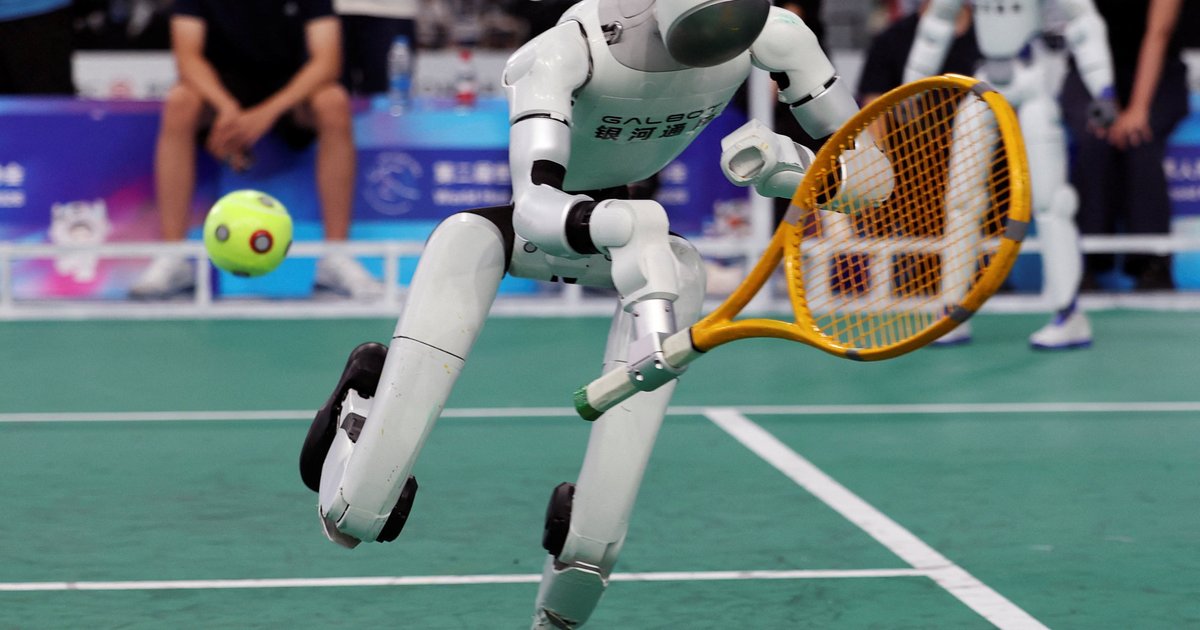
- The tennis robot developed by Galbot can sense incoming balls, predict their trajectories, adjust position, and return shots without preset scripts or human control .
- During the match, the robot traded forehands and backhands with human players and even recovered after losing balance and toppling backwards .
- The Tien Kung robot won the 400m large-robot race in 38.15 seconds, beating the human men's world record of 43.03 seconds by nearly five seconds .
- The top three finishers all completed the race in under 40 seconds, a dramatic improvement from last year's winning time of 88.03 seconds .
- The games feature new competitions including table tennis and kickboxing, alongside expanded scenario-based events covering industrial production, hotels, homes, and logistics .
Why It Matters
The demonstrations at the World Humanoid Robot Games highlight how far humanoid robotics has advanced in terms of autonomous decision-making and physical coordination, with implications for applications beyond entertainment in sectors such as healthcare, logistics, and elderly care .
The demonstrations at the World Humanoid Robot Games highlight how far humanoid robotics has advanced in terms of autonomous decision-making and physical coordination, with implications for applications beyond entertainment in sectors such as healthcare, logistics, and elderly care .