Development Bureau Explains Why Mandatory Metal Scaffolding Unfeasible After Hung Fuk Estate Fire
SingTao · 2 SOURCESabout 1 hour ago3 MIN
Summary
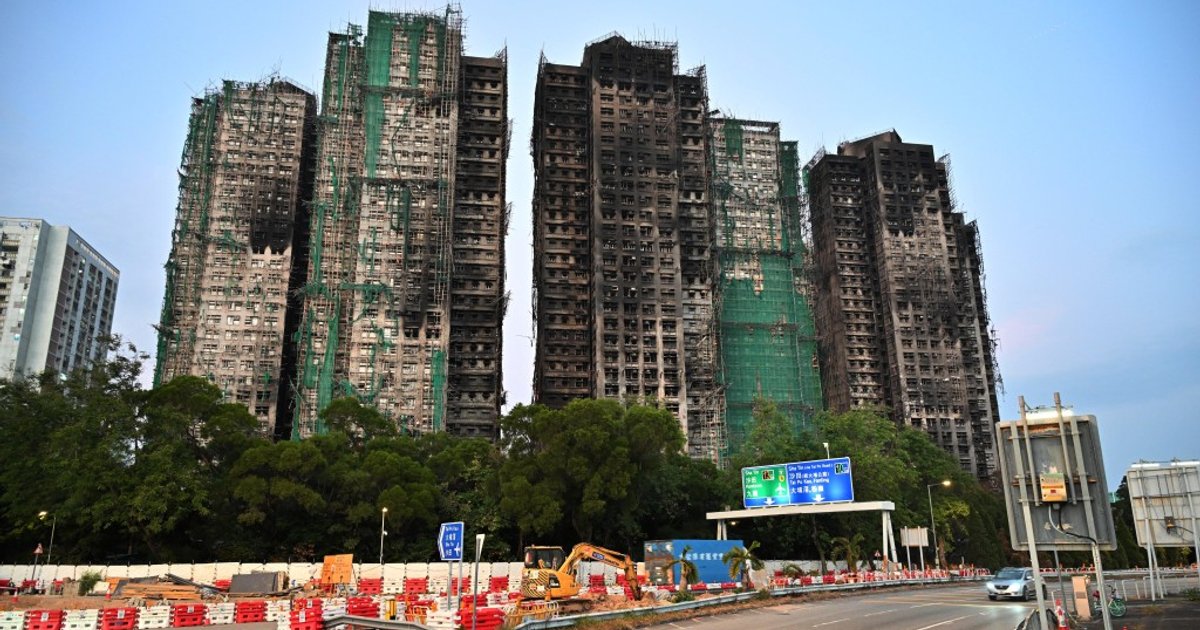
The Development Bureau has told the independent commission investigating the Tai Po Hung Fuk Estate fire that mandating metal scaffolding across all large-scale building maintenance projects is impractical due to structural and logistical constraints. The response was part of a batch of documents released by the commission secretariat on May 12, which included written submissions and witness statements from multiple parties. The bureau acknowledged bamboo scaffolding's fire vulnerabilities while explaining why metal alternatives cannot serve as a universal replacement in Hong Kong's dense urban environment.
Key Points
- The Development Bureau cited weight and adaptability issues as primary obstacles to widespread metal scaffolding adoption, noting it is significantly heavier and less flexible than bamboo .
- About 80% of government public works and major building maintenance projects currently employ bamboo scaffolding, with Labour Department records showing 11 fatal industrial accidents during bamboo scaffold assembly and disassembly between 2021 and 2025, compared to zero fatalities involving metal scaffolding .
- PolyU Professor Chung Kwok-fai provided technical analysis stating bamboo loses half its load-bearing capacity at 60°C to 100°C, whereas steel does not experience equivalent degradation until reaching 500°C to 550°C .
- Metal scaffolding's self-supporting height is limited to approximately 30 meters without additional structural brackets anchored to buildings, making it unsuitable for many older high-rise structures .
- The Buildings Department acknowledged current law imposes no fire-resistance requirements on bamboo scaffold binding materials, working platforms, or toe-boards, though officials suggested fire-resistant specifications for platforms and toe-boards could help slow fire spread .
- The Labour Department is reviewing the Code of Practice to specify toe-board materials and enforce existing board thickness requirements to delay fire spread and prevent objects and workers from falling .
- The bureau confirmed through industry consultation that no practical fire-resistant bamboo scaffold binding materials currently exist in the market .
Why It Matters
The findings address a central safety question raised after the Hung Fuk Estate blaze: whether Hong Kong should phase out traditional bamboo scaffolding in favour of metal alternatives. The Development Bureau's position suggests regulatory focus will shift toward improving fire-resistant properties of bamboo scaffolding components rather than mandating a complete material switch . This leaves open questions about protecting workers and residents during building maintenance in Hong Kong's densely built environment, where older buildings frequently require external maintenance work.
The findings address a central safety question raised after the Hung Fuk Estate blaze: whether Hong Kong should phase out traditional bamboo scaffolding in favour of metal alternatives. The Development Bureau's position suggests regulatory focus will shift toward improving fire-resistant properties of bamboo scaffolding components rather than mandating a complete material switch . This leaves open questions about protecting workers and residents during building maintenance in Hong Kong's densely built environment, where older buildings frequently require external maintenance work.