China's CRRC Expresses Interest in Hong Kong's Three Smart Transit Projects with Virtual Rail System
SingTao · 2 SOURCESabout 1 hour ago2 MIN
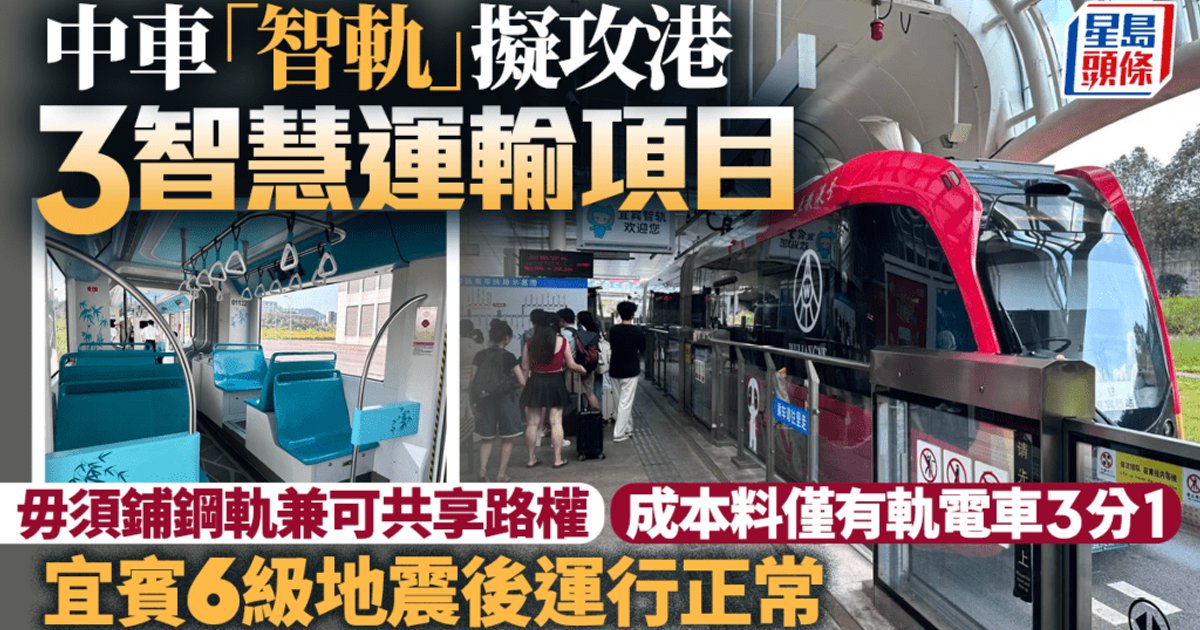
Summary
China's CRRC Corporation (1766) has formally expressed interest in joining Hong Kong's three smart green mass transportation projects through its subsidiary Hunan CRRC Zhixing Technology. The company's Intelligent Rail Transit (ART) system operates on rubber tires along virtual tracks marked by painted lines, eliminating the need for physical steel rails or overhead catenary systems. The technology, first commercially deployed in 2019 in Yibin, Sichuan, is being positioned as a cost-effective alternative to traditional rail-based systems, with per-kilometer costs approximately one-third of conventional tram projects.
Key Points
- Hong Kong is advancing three smart transit projects: Kai Tak, East Kowloon, and Hung Shui Kiu/Ha Tsuen; the Kai Tak tender closes August 14, 2025
- CRRC's ART system uses electronic sensors to detect painted virtual guide lines, with rear car wheels also steering for identical turning radius
- Per-kilometer construction cost ranges from 40-60 million RMB (approximately HK$43-65 million), one-third of traditional tram systems
- Construction cycle takes approximately 10 months; ART trains have 25-year lifespan with maintenance costs equal to vehicle price
- System can handle gradients up to 13%, exceeding East Kowloon's average 6% requirement; minimum headway of 2.5 minutes achievable
- The Kai Tak project offers three residential site development rights to the winning bidder; at least three consortia have submitted bids
Why It Matters
These projects represent Hong Kong's first major foray into innovative mass transit solutions that blend the capacity of rail systems with the flexibility of road vehicles, potentially transforming urban connectivity in developing New Territories areas and dense urban zones. The involvement of major property developers in the bidding consortia underscores how the government's land-incentive model could catalyze broader private sector participation in public infrastructure, setting a precedent for future smart city initiatives in the Greater Bay Area.
These projects represent Hong Kong's first major foray into innovative mass transit solutions that blend the capacity of rail systems with the flexibility of road vehicles, potentially transforming urban connectivity in developing New Territories areas and dense urban zones. The involvement of major property developers in the bidding consortia underscores how the government's land-incentive model could catalyze broader private sector participation in public infrastructure, setting a precedent for future smart city initiatives in the Greater Bay Area.