Global Markets Mixed as Asian Stocks Surge; Oil Prices Climb on Middle East Tensions
Apnews · 1 SOURCESabout 1 hour ago2 MIN
Summary
Global stock markets presented a mixed picture Monday as Asian shares rallied following gains on Wall Street, while European indices showed modest moves in early trading. Japan's Nikkei 225 surged 2.1% to close at 66,970.22, with technology companies providing the primary momentum. The rally extended across the region, with Hong Kong's Hang Seng climbing 1.1% to 25,937.49 and Taiwan's Taiex jumping 1.6%, as investors appeared to lock in profits from recent technology sector winners and rotate into defensive industries such as defense contractors. Meanwhile, oil prices advanced as geopolitical risks remained prominent, with Brent crude rising 0.8% to $84.23 per barrel and U.S. crude gaining 0.7% to $78.72 per barrel, driven by uncertainty surrounding the Israel-Gaza conflict and escalating threats to shipping lanes in the Red Sea.
Key Points
- Japan's Nikkei 225 surged 2.1% to 66,970.22, with Tokyo Electron climbing 4.1% and Advantest rising 6.4% as chip-related stocks led gains
- Hong Kong's Hang Seng gained 1.1% to 25,937.49, while Shanghai Composite rose 0.7% to 3,966.59, reflecting broader Asian market optimism
- Germany's DAX rose 0.3% to 26,411.01, but France's CAC 40 edged 0.1% lower to 8,703.73 and Britain's FTSE 100 lost 0.3% to 10,869.35
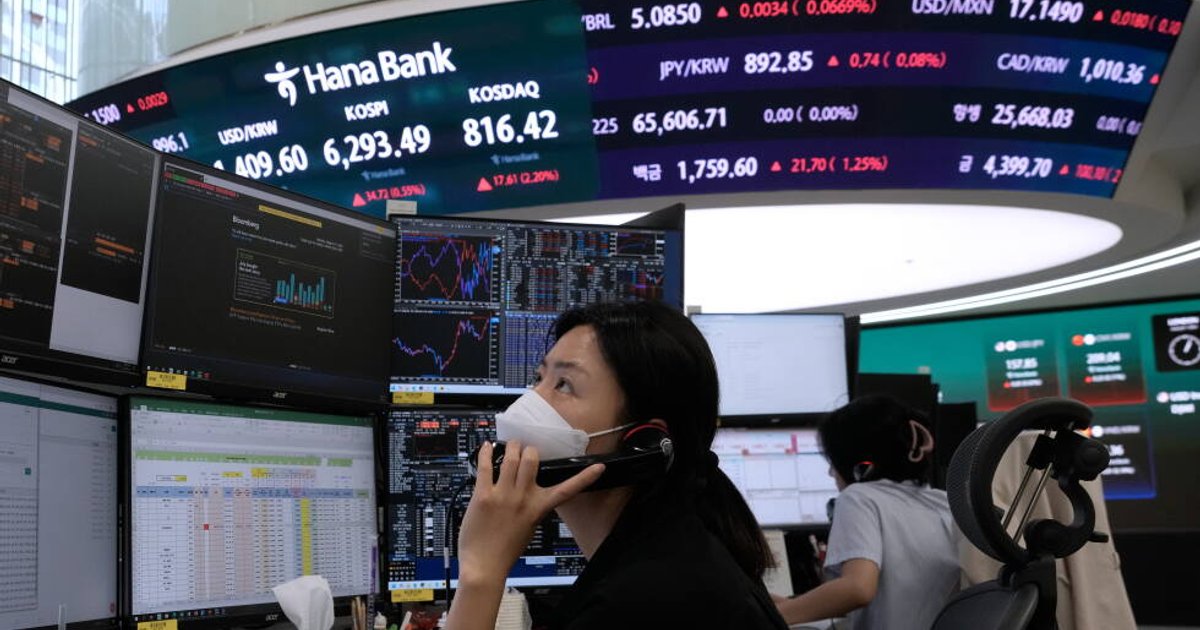
- South Korea's Kospi added 0.7% to 6,299.66, though Samsung Electronics fell 0.4% and SK Hynix slipped 0.1% as major chipmakers underperformed
- Oil prices climbed after Israel rejected a Gaza ceasefire deal, with Brent crude at $84.23 and U.S. crude at $78.72 per barrel
Why It Matters
The regional market divergence reflects shifting investor sentiment as foreign capital rotates out of overextended Big Tech positions into defense and other sectors, potentially signaling a broader reallocation of portfolio weights across Asian markets. For Hong Kong investors, rising oil prices combined with Red Sea shipping threats could exert inflationary pressure on import costs and shipping expenses, affecting everything from energy-dependent industries to consumer goods retailers operating through maritime trade routes .
The regional market divergence reflects shifting investor sentiment as foreign capital rotates out of overextended Big Tech positions into defense and other sectors, potentially signaling a broader reallocation of portfolio weights across Asian markets. For Hong Kong investors, rising oil prices combined with Red Sea shipping threats could exert inflationary pressure on import costs and shipping expenses, affecting everything from energy-dependent industries to consumer goods retailers operating through maritime trade routes .