Hyundai Union Launches First Full-Day Strike in Decade, Causing HK$13 Billion in Losses
SingTao · 1 SOURCESabout 1 hour ago2 MIN
Summary
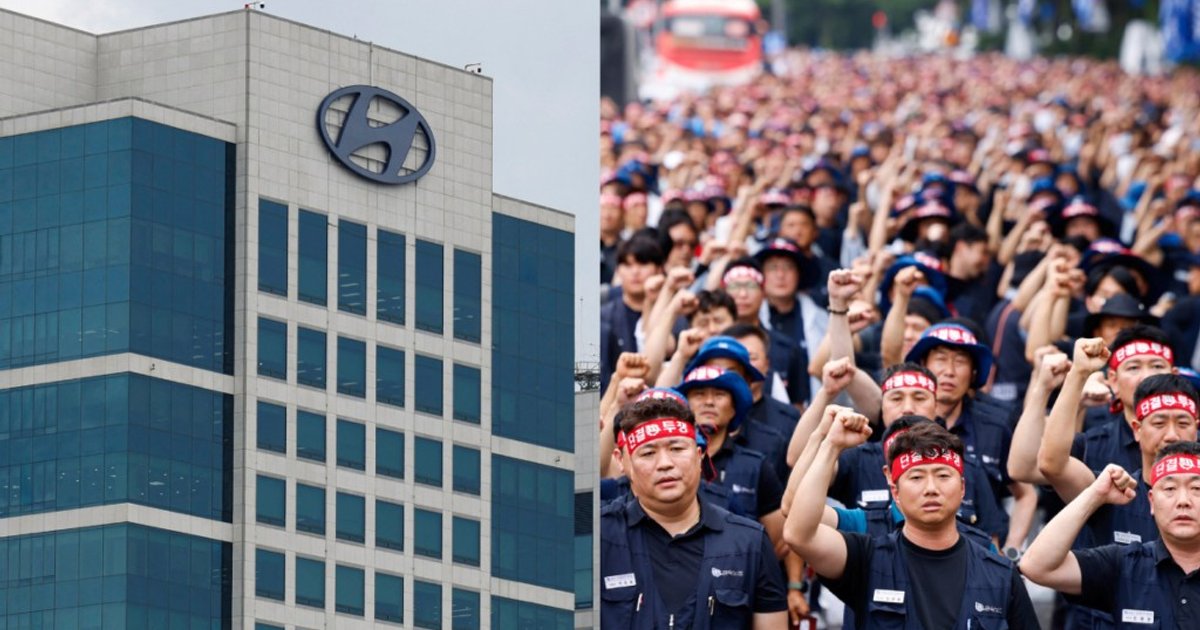
Hyundai Motor's labor union staged a full-day strike on Friday, June 21, marking the first complete work stoppage since 2016. The industrial action involved 39,000 workers across major production facilities in Ulsan, Jeonju, and Asan, halting production for 16 hours. Industry analysts estimate this year's accumulated strike actions have disrupted manufacturing for 120 hours, resulting in losses of 55,000 vehicles and over 2.3 trillion won (approximately HK$130.2 billion) in sales. The union has announced additional four-hour strikes on Monday and Tuesday next week.
Key Points
- Hyundai Motor union held its first full-day strike since 2016 on June 21, with 39,000 workers participating
- Production halted at Ulsan, Jeonju, and Asan plants for 16 hours; estimated 55,000 vehicles lost in production
- Cumulative strike duration reached 60 hours this year, causing 120 hours of production stoppage
- Total sales losses estimated at 2.3 trillion won (HK$130.2 billion) based on 460 vehicles per hour production rate
- Union demands include higher bonuses, retirement age extension, AI/automation job guarantees, and worker reinstatement
- Union cites company's 101 trillion won retained earnings and 13 trillion won annual net profit as basis for demands
- Hyundai Motor states union demands lack legal foundation, preferring dialogue to resolve disputes
- Additional strikes scheduled for June 24-25, four hours each day
Why It Matters
This strike underscores escalating tensions between South Korean automakers and workers over automation and job security at a time when the global automotive industry is rapidly adopting artificial intelligence. The significant financial impact and prolonged labor dispute may influence how Hyundai structures its future workforce and technology integration, potentially setting precedents for other manufacturers in the region.
This strike underscores escalating tensions between South Korean automakers and workers over automation and job security at a time when the global automotive industry is rapidly adopting artificial intelligence. The significant financial impact and prolonged labor dispute may influence how Hyundai structures its future workforce and technology integration, potentially setting precedents for other manufacturers in the region.