Guinea Landfill Collapse Death Toll Rises to 30 as Rescue Operations Continue
SCMP · 2 SOURCESabout 1 hour ago2 MIN
Summary
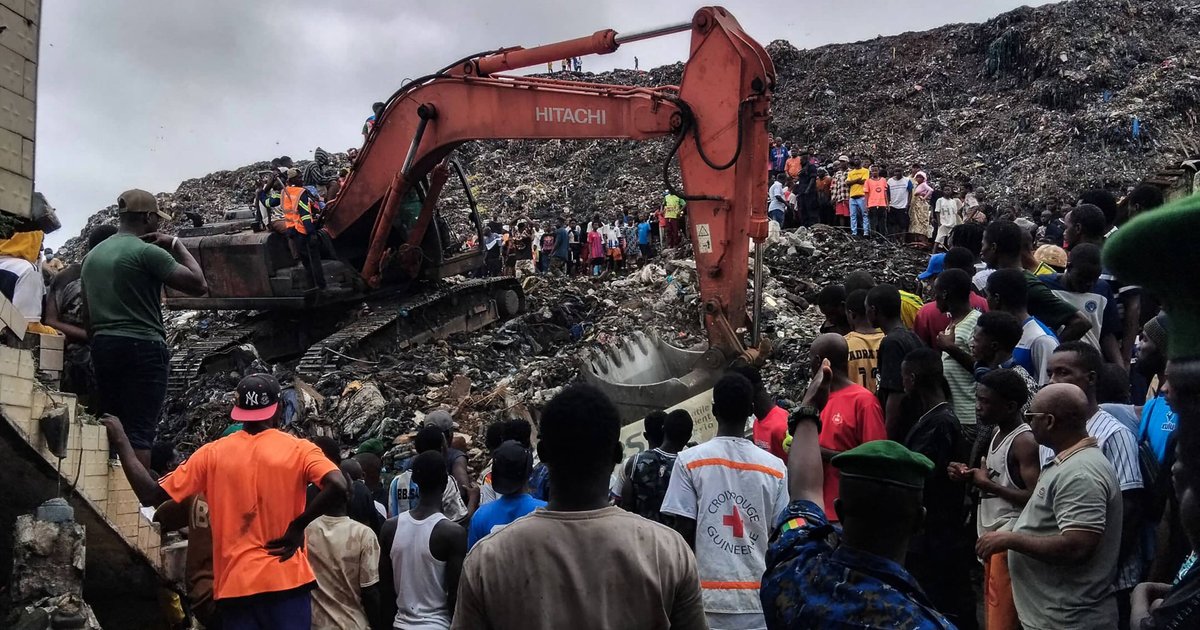
A devastating landslide struck the largest landfill in Guinea's capital Conakry early Sunday morning, killing at least 30 people after heavy overnight rains caused a massive mound of refuse to collapse onto nearby shacks and tents. The incident occurred at approximately 2 a.m. (0200 GMT) in the Gbessia commune, trapping residents living in precarious conditions adjacent to the dump site. Rescue operations were ongoing as emergency workers sifted through the debris, with the death toll expected to rise.
Key Points
- The confirmed death toll stands at 30, with 6 people seriously injured and 16 more sustaining minor injuries
- Heavy rains beginning around 3 a.m. destabilized the refuse heap, triggering a landslide that engulfed nearby dwellings
- Djenab Toure, Guinea's minister of territorial administration, visited the site and stated officials were awaiting the completion of search and rescue operations before announcing an official figure
- The government had announced on Thursday that the landfill would be closed due to the danger it posed during the rainy season, with plans to relocate waste outside Conakry
- Lancine Sylla, head of the suburb where the incident occurred, expressed concern that the death toll would be substantial
- Lieutenant Colonel Balde Mamadou Bailo, sanitation officer for the Military Engineering Battalion, confirmed the site was designated for closure on Sunday
- Witnesses reported the landslide was large enough to bury an apartment building along with more precarious dwellings
- One survivor, Cire Diallo, told reporters at the scene that all five of her children were killed in the disaster
Why It Matters
The tragedy highlights the deadly consequences of inadequate urban planning and the vulnerability of impoverished communities living near hazardous infrastructure in developing nations. While Guinea possesses the world's largest bauxite reserves and the Simandou iron ore deposit—where a massive mining project launched in November—the disaster underscores the stark contrast between the country's resource wealth and its struggles with poverty and infrastructure, with 3.7 million of its 15.1 million people living below the poverty line .
The tragedy highlights the deadly consequences of inadequate urban planning and the vulnerability of impoverished communities living near hazardous infrastructure in developing nations. While Guinea possesses the world's largest bauxite reserves and the Simandou iron ore deposit—where a massive mining project launched in November—the disaster underscores the stark contrast between the country's resource wealth and its struggles with poverty and infrastructure, with 3.7 million of its 15.1 million people living below the poverty line .