AirAsia Passenger Defecates in Seat on Malaysia-Shanghai Flight, Forces 40-Minute Cabin Odor Ordeal
On.cc · 2 SOURCESabout 1 hour ago2 MIN
Summary
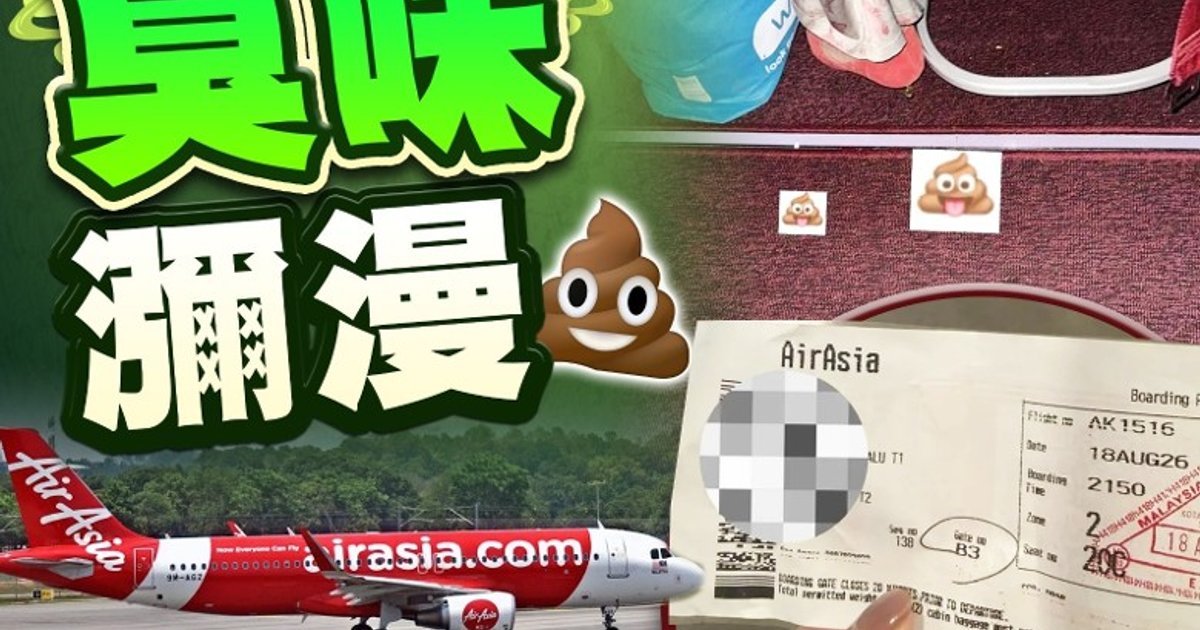
A passenger on AirAsia flight AK1516 from Kota Kinabalu, Malaysia to Shanghai Pudong caused a hygiene incident by defecating in her seat instead of using a toilet located just 5 meters away. The smell permeated the entire cabin for 40 minutes as the aircraft prepared for landing with air conditioning switched off. Flight attendants attempted to clean the mess with tissues and perfume but were unable to contain the odor, leaving passengers distressed.
Key Points
- Flight AK1516 departed Kota Kinabalu International Airport on June 18 at 10:30 PM and arrived at Shanghai Pudong International Airport on June 19 at approximately 3 AM
- The incident occurred around 2 AM, approximately 40 to 50 minutes before landing, when a woman in her 40s traveling with two children defecated in her seat
- A toilet was located just 5 meters behind the passenger's row (row 26), and the toilet door was not closed at the time of the incident
- Flight attendants used tissues to clean the floor and sprayed perfume to mask the smell, but the odor persisted as air conditioning was shut off for landing
- Passenger Mr. Zhuo, who was seated across the aisle from the incident, said sleeping passengers were awakened by the spreading stench before discovering feces on the floor and seats
- The woman claimed she was not feeling well and could not make it to the toilet in time, stating "everyone gets sick sometimes"
- Eye witnesses reported seeing the woman hastily carrying a bag of feces to the lavatory to dispose of it
- AirAsia has not provided any compensation or response to complaints filed by affected passengers
Why It Matters
This incident highlights growing concerns about passenger conduct on budget airlines and the challenges flight crews face in managing hygiene emergencies mid-flight. As low-cost carriers expand their routes across Asia, such incidents may test both airline protocols and passenger tolerance, potentially influencing future policies on in-flight emergencies and compensation standards .
This incident highlights growing concerns about passenger conduct on budget airlines and the challenges flight crews face in managing hygiene emergencies mid-flight. As low-cost carriers expand their routes across Asia, such incidents may test both airline protocols and passenger tolerance, potentially influencing future policies on in-flight emergencies and compensation standards .