CUHK President Lo Yuk-ming Warns AI May Stifle Human Creativity Despite Research Gains
HK01 · 1 SOURCESabout 1 hour ago5 MIN
Summary
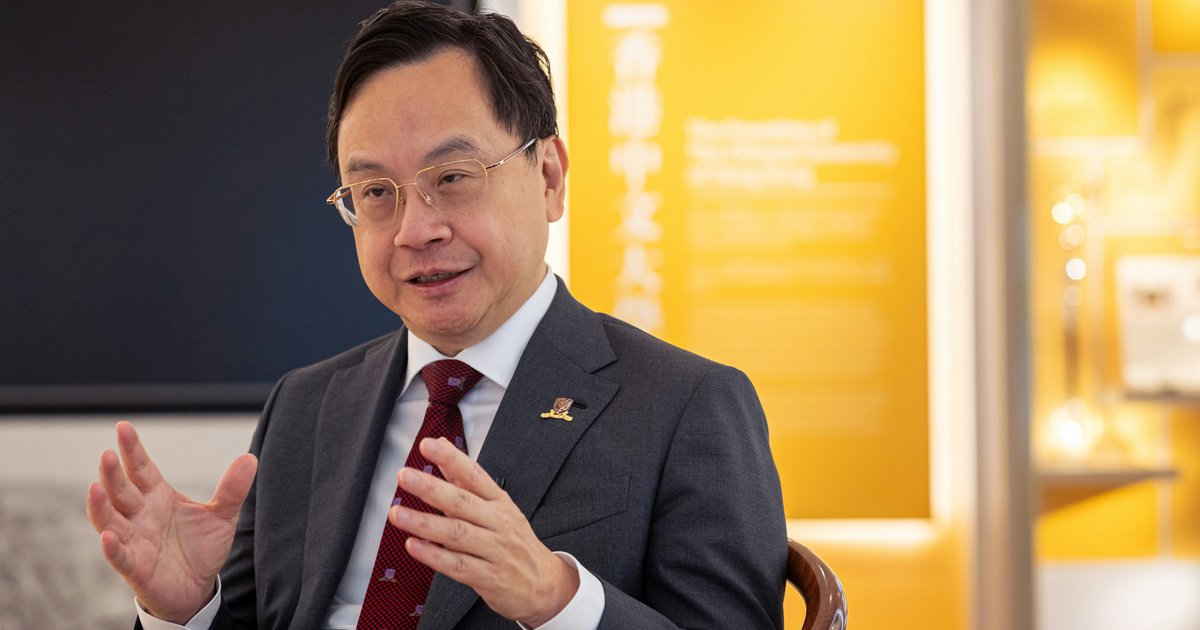
Chinese University of Hong Kong (CUHK) President Lo Yuk-ming (盧煜明), renowned as the "father of non-invasive prenatal testing," has offered a nuanced assessment of artificial intelligence in scientific research. In an exclusive interview with HK01, he described AI as potentially the most important development in human technological history, yet warned that its rapid problem-solving capabilities risk reducing the intellectual satisfaction of discovery and constraining human creativity .
Key Points
- Lo Yuk-ming's research team has achieved 99% accuracy in distinguishing whether DNA originates from the brain or heart, overturning the previous scientific consensus that all body cells share identical DNA sequences, by using AI to predict and fill in missing genetic "words" .
- The scientist expressed personal preference for slower human-derived insights over instant AI-generated solutions, stating "I would rather figure it out myself, even if it takes longer" .
- Lo advises researchers to operate on the assumption that AI outputs are wrong, recommending cross-validation through multiple AI models and repeated verification of results to combat AI hallucination .
- CUHK has implemented a three-tier AI policy for students: mandatory AI use, optional use, or prohibition, with students required to disclose how they incorporated AI assistance and verify content authenticity .
- Lo warned that widespread AI adoption may lead to increasingly uniform societal thinking patterns, reducing diverse perspectives and ultimately stifling human creativity .
Why It Matters
For Hong Kong's ambition to become an international innovation and technology hub, Lo's stance presents a critical tension: embracing AI's efficiency while preserving the creative thinking that drives genuine breakthroughs. His institutional framework at CUHK offers a template for other local universities grappling with how to integrate AI into education without undermining academic integrity or the developmental value of intellectual struggle .
For Hong Kong's ambition to become an international innovation and technology hub, Lo's stance presents a critical tension: embracing AI's efficiency while preserving the creative thinking that drives genuine breakthroughs. His institutional framework at CUHK offers a template for other local universities grappling with how to integrate AI into education without undermining academic integrity or the developmental value of intellectual struggle .