14-Year-Old Tennis Prodigy Huang Qian Targets World No. 1 After Rising to Asia's Fourth
SingTao · 1 SOURCESabout 1 hour ago2 MIN
Summary
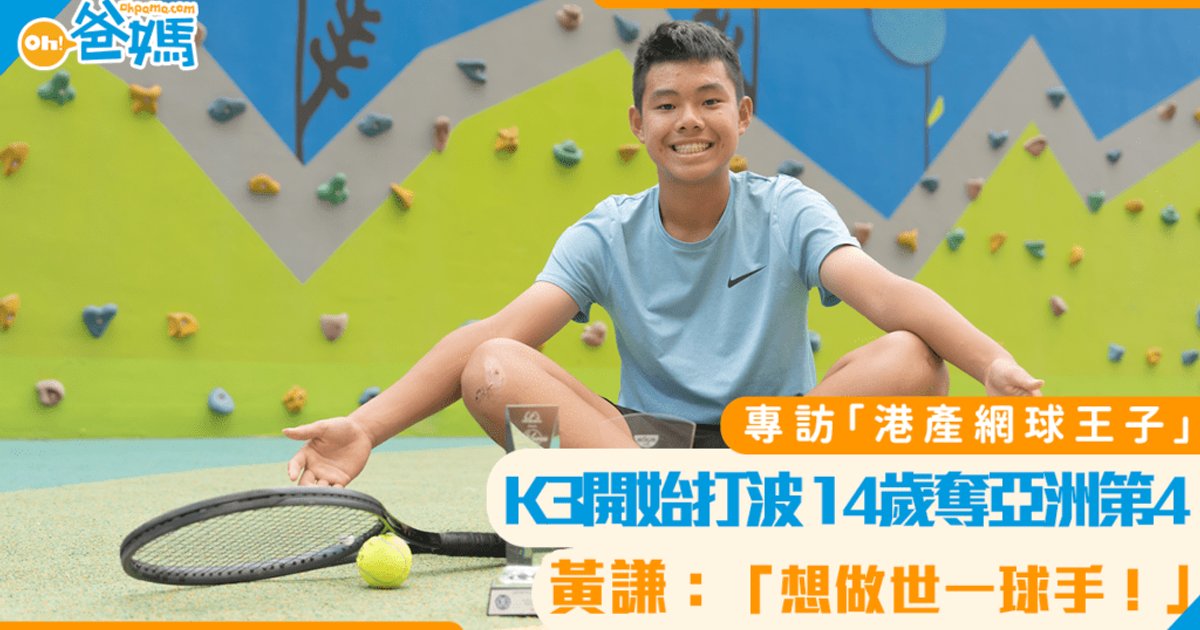
Fourteen-year-old Hong Kong tennis player Huang Qian has emerged as one of Asia's most promising young talents, climbing to fourth in the Asian rankings. The teenager, who first picked up a racket while in kindergarten playing with his father, has already claimed victories at the ATF Grade A event and multiple Hong Kong junior championships. With limited resources as the son of ordinary office workers, Huang relies on his parents' unwavering support and a sponsorship program to pursue his dream of becoming the world's top player.
Key Points
- Huang Qian began playing tennis at K3 level when his tennis-loving father brought him to the court, and he quickly fell in love with the sport's challenges .
- His achievements include ATF Grade A singles runner-up and doubles champion, plus three U14 and U16 titles at the Hong Kong Junior Open .
- After winning singles runner-up and doubles champion at the January ATF 14&Under Grade A event in Bahrain, his Asian ranking surged from 20th to 7th .
- His parents, both ordinary office workers without resources for private coaches, support his dream by driving him to six training sessions weekly and accompanying international tournaments .
- Selected for Genki Sushi's one-year "Future GO!" sponsorship program, Huang gained funding to compete abroad in Malaysia and Kazakhstan, climbing to Asia's fourth-ranked player .
Why It Matters
Huang's rapid ascent demonstrates Hong Kong's potential to produce world-class tennis talent despite limited local infrastructure. His family's dedication and the corporate sponsorship model could set a precedent for developing future Hong Kong athletes in individual sports, where resources traditionally favor wealthier families .
Huang's rapid ascent demonstrates Hong Kong's potential to produce world-class tennis talent despite limited local infrastructure. His family's dedication and the corporate sponsorship model could set a precedent for developing future Hong Kong athletes in individual sports, where resources traditionally favor wealthier families .