HKU President Supports Northern Metropolis, Eyes Education Hub Role
RTHK · 1 SOURCESabout 1 hour ago2 MIN
Summary
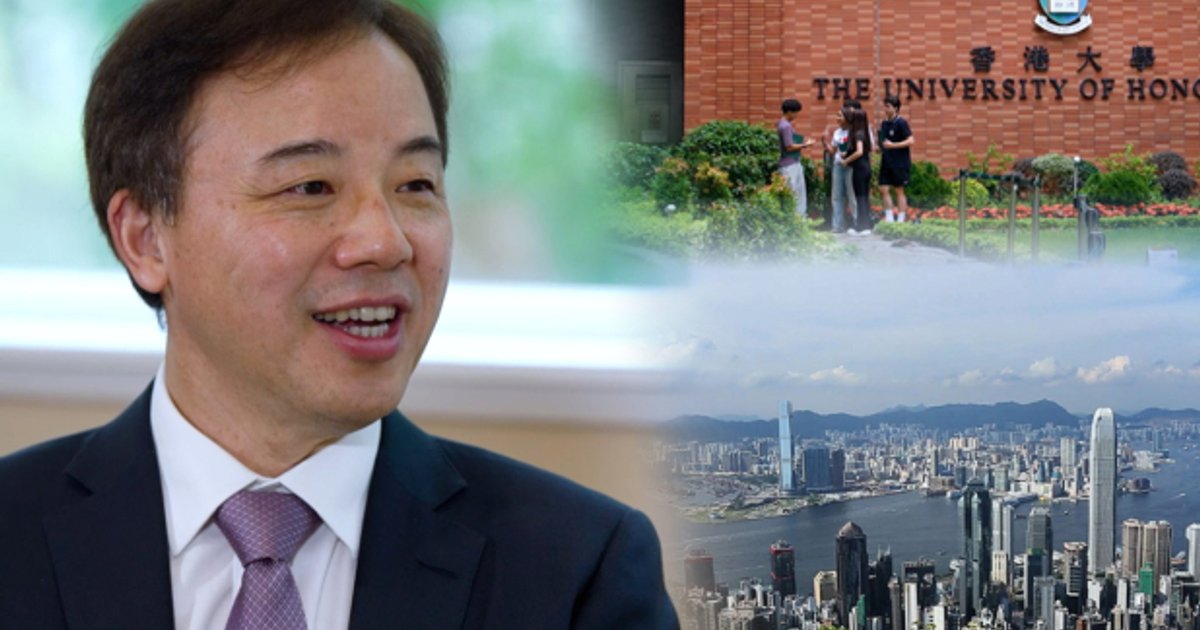
Hong Kong University President Zhang Xiang has expressed firm support for the government's Northern Metropolis development strategy, stating it would unlock much-needed land for emerging industries such as biomedical technology and artificial intelligence. In an interview with RTHK's program "Hong Kong's 15th Five-Year Plan," Zhang outlined how the Northern Metropolis could transform Hong Kong into a global higher education powerhouse while supporting national education goals. The university has recently strengthened its faculty with prestigious recruits including Nobel Prize and Fields Medal laureates, capitalizing on Hong Kong's unique advantages as an international hub.
Key Points
- Hong Kong's national "15th Five-Year Plan" explicitly supports the city becoming an international high-end talent hub
- HKU President Zhang Xiang strongly endorses Northern Metropolis development for new industries including biomedical and AI sectors
- The Northern Metropolis university town should become a global higher education hub contributing to national education powerhouse goals
- Current HKU campus area is less than one-sixth the size of Tsinghua University, limiting research expansion opportunities
- Seventy percent of HKU professor-level faculty members are from outside Hong Kong, demonstrating international recruitment success
- University recently secured Nobel Prize and Fields Medal winners as faculty members, boosting academic prestige
- Zhang proposes allowing higher non-local student ratios while maintaining current local student admission numbers
- HKU formally launched its Shanghai strategic initiative in February with four bases forming a complete academic-to-industry chain
- The Yangtze River Delta provides high-tech industrial experience and internship opportunities lacking in Hong Kong
Why It Matters
The Northern Metropolis development represents a critical opportunity to address Hong Kong's spatial constraints that limit academic research and industry growth. By positioning the Northern Metropolis as a global education hub, Hong Kong can better contribute to national strategic goals while strengthening its role as a bridge between mainland innovation ecosystems and international talent networks. The collaboration between HKU and Yangtze River Delta enterprises could establish new models for academic-industry partnerships that benefit both Hong Kong and the broader nation.
The Northern Metropolis development represents a critical opportunity to address Hong Kong's spatial constraints that limit academic research and industry growth. By positioning the Northern Metropolis as a global education hub, Hong Kong can better contribute to national strategic goals while strengthening its role as a bridge between mainland innovation ecosystems and international talent networks. The collaboration between HKU and Yangtze River Delta enterprises could establish new models for academic-industry partnerships that benefit both Hong Kong and the broader nation.