Social Worker Urges Parents to Redefine Filial Piety
SingTao · 1 SOURCESabout 1 hour ago2 MIN
Summary
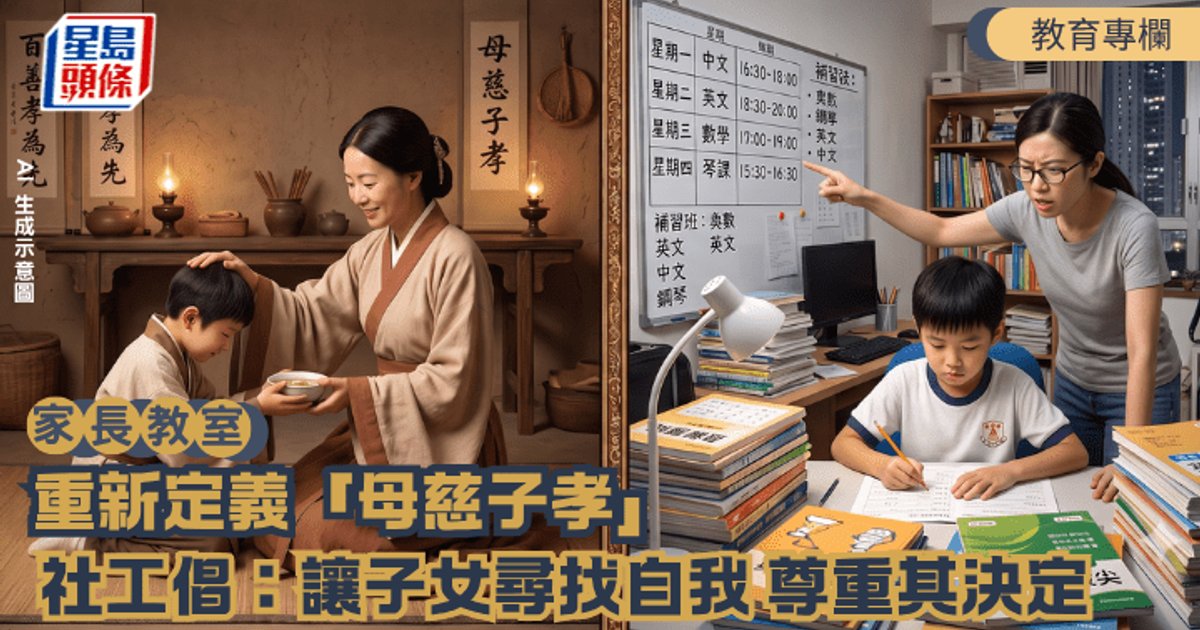
A commentary by Hong Kong Federation of Youth Groups parent education social worker Cheng Tsz-kei says the long-standing ideal of “kind parents and filial children” remains relevant, but its meaning has changed across generations. She contrasts older expectations of parental sacrifice and children repaying parents in later life with today’s realities of dual-income households, heavy academic pressure and stronger individualism. Cheng argues that modern parental care should place less emphasis on endless tutoring and more on companionship, listening and understanding children’s struggles. She also says children should be allowed to explore their identities in a diverse world, with parents respecting decisions they make for themselves
Key Points
- Cheng traces “kind parenthood” back more than 2,000 years, citing examples such as Mencius’s mother moving home for education and a mother’s constant care
- She says modern parents still relocate for better school networks and pay for multiple tutorial classes, showing continued commitment to children’s advancement
- In caregiving, however, Cheng notes that with the rise of dual-income families, some day-to-day care has often shifted to domestic helpers
- On filial piety, she says Han-era ideals stressed children repaying parents through later-life care, while many 21st-century parents now mainly hope children become self-reliant
- Cheng warns that excessive tutoring can worsen already heavy school pressure, leave children with unhappy memories and deepen parent-child conflict despite parents’ good intentions
Why It Matters
For Hong Kong families, the piece speaks directly to a familiar tension between investing heavily in children’s education and protecting their emotional wellbeing. It suggests that in a high-pressure city, respect, listening and room for self-discovery may now be more meaningful measures of good parenting and filial family relationships than academic results alone