Declining Birth Rate Forces School Mergers as Hong Kong's Education Map Awaits Rewrite
HK01 · 1 SOURCESabout 1 hour ago3 MIN
Summary
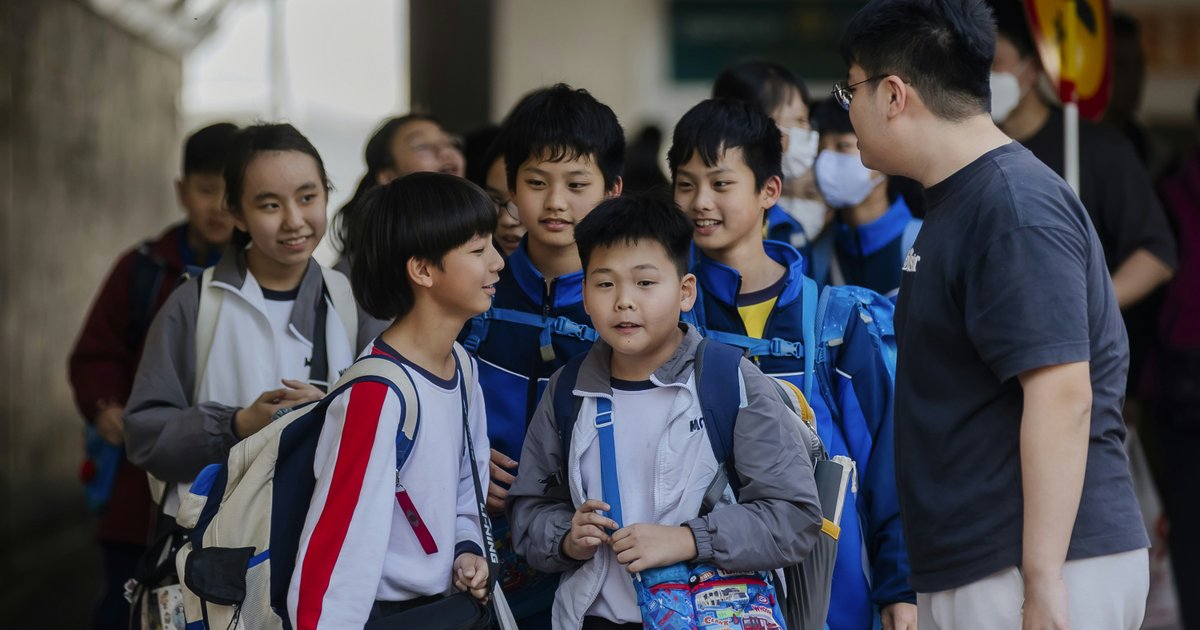
As August draws to a close, parents scramble to buy textbooks while schools prepare to welcome new students. Yet the atmosphere of anticipation is tempered by a stark reality: the Education Bureau has confirmed that 15 primary schools received zero Primary One allocations this year, with 8 schools merging and 4 gradually ceasing operations. This wave of closures, driven not by sudden quality failures but by fundamental demographic shifts, signals that the consolidation of Hong Kong's education sector is only just beginning.
Key Points
- Hong Kong recorded approximately 31,000 births last year, continuing a downward trend that shows no signs of reversing .
- The Primary One cohort (age 6) is projected to decline from approximately 47,000 in 2026 to 38,000 by 2035, representing a 23 percent decrease .
- The Secondary One cohort (age 12) faces an even steeper decline, dropping from roughly 54,000 in 2026 to 32,000 by 2035—a nearly 40 percent contraction .
- With approximately 500 primary and 500 secondary schools currently operating, such drops could necessitate the adjustment of hundreds of institutions .
- Natural population decrease reached approximately 50,000 deaths against births in 2025, while net migration primarily supplements the workforce rather than the school-age population .
- Hong Kong's inaugural Five-Year Plan public consultation concluded with over 16,000 submissions, with the government expected to release its formal document in September .
- Secretary for Constitutional and Mainland Affairs Tse Hio-wa indicated strong public support for accelerating Northern Metropolis development and integrated industry-academia-research growth .
- The Northern Metropolis, planned to accommodate approximately 2.5 million residents, currently houses only about 1 million people, requiring an additional 1.5 million to reach capacity .
- Three strategic approaches have been proposed: addressing population distribution impacts on older districts during Northern Metropolis development; proactively restructuring the education system through quality mergers and shared resources; and incorporating long-term population planning into the Five-Year Plan .
Why It Matters
The school closure wave exposes a fundamental misalignment between Hong Kong's education infrastructure and its demographic reality. With the city's population already in natural decline and migration patterns failing to replenish school-age cohorts, the Northern Metropolis development must be carefully calibrated to attract young families—otherwise, infrastructure investments risk becoming disconnected from actual educational needs . The Five-Year Plan represents a critical window to transform reactive school closures into proactive, quality-driven educational restructuring that can sustain Hong Kong's appeal to future generations.
The school closure wave exposes a fundamental misalignment between Hong Kong's education infrastructure and its demographic reality. With the city's population already in natural decline and migration patterns failing to replenish school-age cohorts, the Northern Metropolis development must be carefully calibrated to attract young families—otherwise, infrastructure investments risk becoming disconnected from actual educational needs . The Five-Year Plan represents a critical window to transform reactive school closures into proactive, quality-driven educational restructuring that can sustain Hong Kong's appeal to future generations.