Wong Chun Ting Returns with Two Silver Medals from WTT Swedish Grand Slam
SingTao · 1 SOURCESabout 1 hour ago2 MIN
Summary
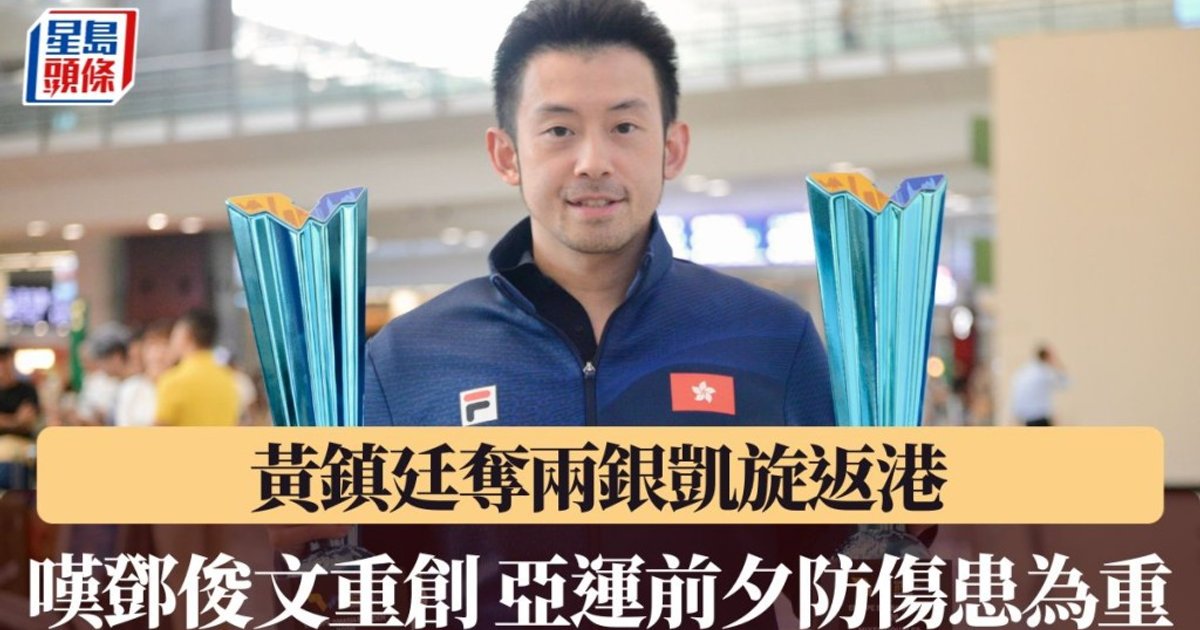
Hong Kong table tennis star Wong Chun Ting returned to Hong Kong on September 17 after capturing two silver medals at the WTT Swedish Grand Slam in Sweden. The seasoned campaigner, who turns 35 next month, secured silver in both men's doubles with partner Chen Ho Kwan and mixed doubles with Doo Hoi Kem. With the Nagoya Asian Games less than a month away, Wong plans to depart for the Huangshi training base in mainland China for final preparations. The veteran athlete expressed concern over badminton teammate Tang Chun Man's season-ending knee injury, emphasizing that injury prevention remains his top priority in the critical preparation phase.
Key Points
- Wong Chun Ting won men's doubles silver with Chen Ho Kwan, losing straight sets to France's Lebrun brothers in the final
- In mixed doubles, Wong and Doo Hoi Kem fell 1-3 to China's Lin Shidong/Kuai Man, settling for another silver medal
- Wong will travel to Huangshi in mainland China on September 18 for an intensive training camp ahead of the Asian Games
- The near-35-year-old revealed his knees are feeling discomfort after consecutive high-intensity matches at the Swedish event
- Badminton player Tang Chun Man suffered an almost complete anterior cruciate ligament tear, forcing his withdrawal from the Asian Games
Why It Matters
As Hong Kong's leading table tennis player competing in multiple events at the Asian Games, Wong's physical condition will be crucial to the territory's medal prospects. His experience and resilience at an advanced competitive age, combined with his cautious approach to injury management, set an important precedent for Hong Kong athletes balancing elite performance with long-term career sustainability.
As Hong Kong's leading table tennis player competing in multiple events at the Asian Games, Wong's physical condition will be crucial to the territory's medal prospects. His experience and resilience at an advanced competitive age, combined with his cautious approach to injury management, set an important precedent for Hong Kong athletes balancing elite performance with long-term career sustainability.