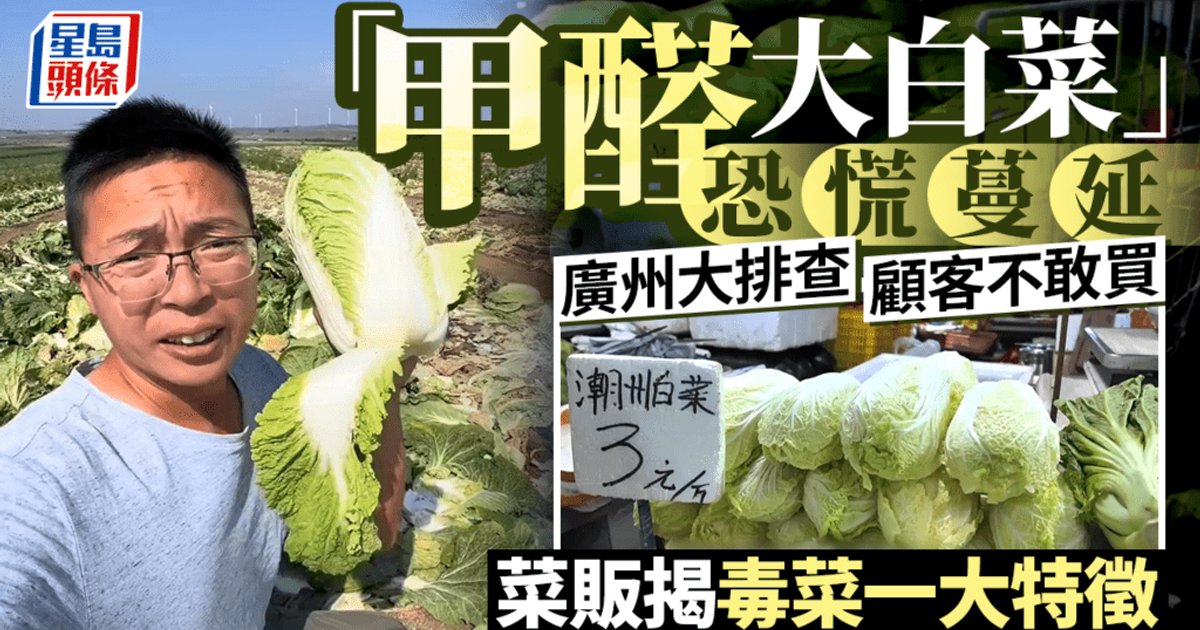
Guangzhou Cracks Down on Formaldehyde Cabbage as Prices Plunge 20 Percent
SingTao · 2 SOURCESabout 1 hour ago2 MIN
Summary
Guangzhou has launched a sweeping investigation into cabbage supplies at the Jiangnan Wholesale Market after a food safety scandal involving formaldehyde-tainted vegetables erupted in Hebei Province. Despite local produce originating from Gansu and Yunnan rather than the affected Kangbao County, consumer panic has driven wholesale prices down nearly 20 percent. Taiwan has responded by tightening border inspections on Chinese cabbage and related products.
Key Points
- Hebei's Kangbao County was found using toxic formaldehyde solution to preserve cabbage during pre-shipment preparation
- Guangzhou's Jiangnan market, the largest fruit and vegetable distribution center in South China, saw cabbage sales and prices both fall about 20 percent
- Market testing found 82 batches of cabbage from Gansu, Yunnan, Tianjin and Hebei all cleared formaldehyde checks on March 25, with 70 more batches passing on March 26
- March 26 supply totaled approximately 535 tonnes, including 7 tonnes from Hebei, with no products traced to the scandal-hit Kangbao County
- Wholesalers report prices fell below 1 yuan per jin (approximately HK$1.1), operating at a loss
- Guangzhou's agricultural bureau has initiated preventive inspections of all local cultivation bases, while market operators require full traceability documentation
- Taiwan's Food and Drug Administration announced enhanced border screening, though records show no Chinese cabbage imports since January 1
Why It Matters
Hong Kong relies on Guangzhou's Jiangnan market as a primary source for fresh vegetables, making any disruption to this supply chain a direct concern for local consumers and retailers. The incident exposes how cost-driven suppliers may substitute expensive cold-chain logistics with dangerous chemical preservatives during long-distance transport, raising broader questions about food safety oversight in cross-border produce distribution .
Hong Kong relies on Guangzhou's Jiangnan market as a primary source for fresh vegetables, making any disruption to this supply chain a direct concern for local consumers and retailers. The incident exposes how cost-driven suppliers may substitute expensive cold-chain logistics with dangerous chemical preservatives during long-distance transport, raising broader questions about food safety oversight in cross-border produce distribution .