Hong Kong Professor Urges Death Education as End-of-Life Care Debates Human Dignity
HK01 · 1 SOURCESabout 1 hour ago2 MIN
Summary
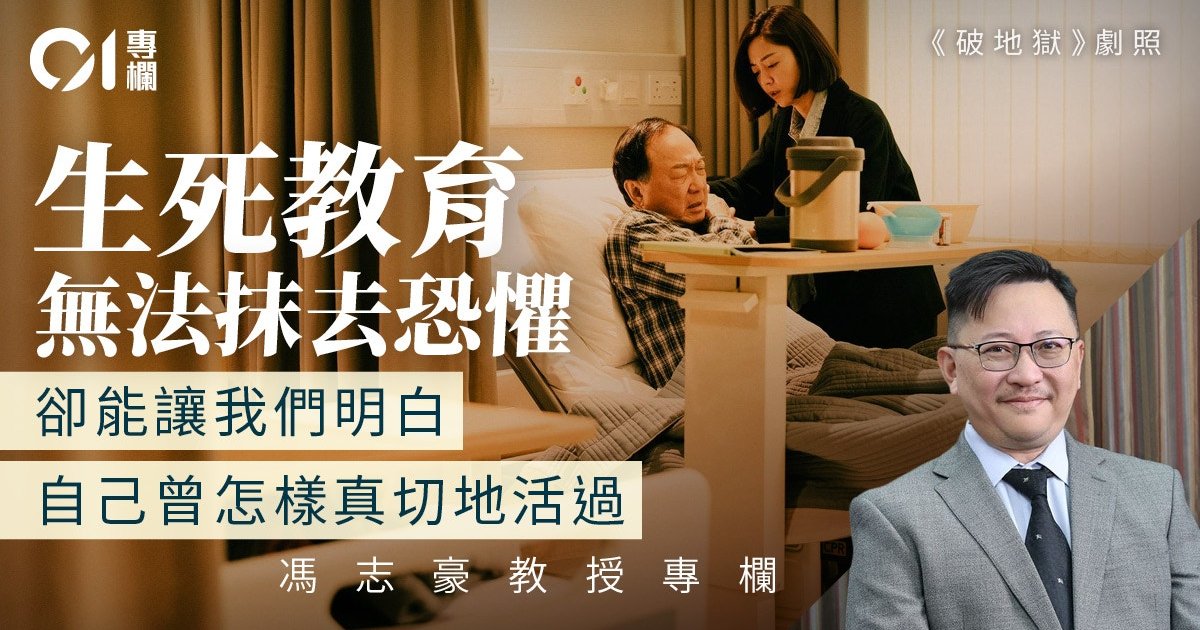
Professor Feng Zhihao from Hong Kong's tertiary institutions argues that death remains a taboo topic in society, preventing mature discussions about end-of-life care. His lecture course on palliative treatment begins by asking students to rate their comfort level with discussing death on a scale of 1 to 10. The article emphasizes that quality late-stage care requires understanding patients as whole persons rather than merely managing symptoms.
Key Points
- Professor Feng Zhihao teaches "End-of-Life and Palliative Care" at Hong Kong's post-secondary institutions, beginning each course by having students self-assess their comfort discussing death on a 1-10 scale .
- Dame Cicely Saunders, who pioneered the modern hospice movement in the 1960s, introduced the concept of "Total Pain," which encompasses physical discomfort, psychological anxiety, family concerns, and existential questions .
- End-of-life trajectories vary significantly: cancer patients often maintain function before declining rapidly in weeks or months, while organ failure involves fluctuating conditions, and elderly frailty or dementia presents as prolonged gradual decline .
- In Chinese societies, families often pressure medical staff not to disclose diagnoses fully, with children feeling obligated to pursue aggressive treatment even when patients prefer less invasive approaches .
- Social workers note that some individuals experience social death—being gradually marginalized and forgotten—while still biologically alive due to severe cognitive impairment, prolonged bed rest, or extreme isolation .
Why It Matters
As Hong Kong's population ages rapidly, the healthcare system faces mounting pressure to develop compassionate approaches to end-of-life care that balance medical intervention with human dignity. The article suggests that advancing death education could help families distinguish between respecting a patient's wishes and abandoning treatment, potentially reducing unnecessary suffering while honoring filial piety in its most meaningful form .
As Hong Kong's population ages rapidly, the healthcare system faces mounting pressure to develop compassionate approaches to end-of-life care that balance medical intervention with human dignity. The article suggests that advancing death education could help families distinguish between respecting a patient's wishes and abandoning treatment, potentially reducing unnecessary suffering while honoring filial piety in its most meaningful form .