Shenzhen's Unified School Uniforms Spark Nationwide Calls for Reform
AM730 · 2 SOURCESabout 1 hour ago2 MIN
Summary
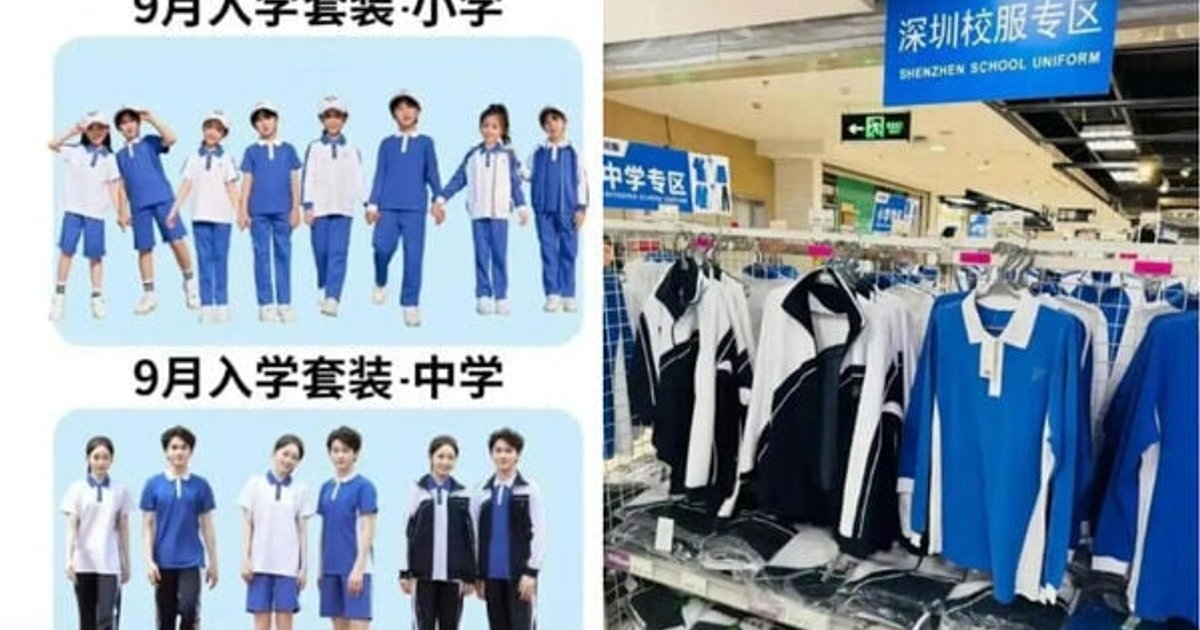
Shenzhen's citywide standardized school uniform system has drawn nationwide attention as the new semester began on September 1. The model allows parents to purchase uniforms directly from supermarkets, department stores, and stationery shops without going through school procurement, with complete sets costing under 100 yuan. Netizens on social media have praised the approach as highly practical, with many urging other cities to follow Shenzhen's lead. The system, established in 2002, is considered mainland China's first citywide uniform initiative, and a new color standard was introduced in August 2026 to further regulate quality.
Key Points
- Shenzhen standardized school uniforms citywide in 2002, making it mainland China's first city to implement such a system
- About 150 uniform suppliers serve Shenzhen schools, with sales points including stationery stores, community shops, supermarkets, and online platforms
- Uniforms can be ordered through food delivery apps and delivered within 30 minutes, offering maximum convenience for parents
- Primary school summer sports suits cost under 140 yuan, autumn jackets are 75 yuan, and winter suits are 208 yuan
- Secondary school summer suits are under 170 yuan, autumn jackets 85 yuan, and winter suits 248 yuan
Why It Matters
Shenzhen's school uniform model addresses longstanding complaints about opaque pricing and alleged corruption in school procurement systems across mainland China . With other cities charging hundreds or even 700 yuan per uniform set through school-mandated channels, the Shenzhen approach demonstrates that standardization and market competition can simultaneously reduce costs and increase quality . For Hong Kong, where school uniform costs vary significantly between institutions, this model offers a potential reference point for policy discussions on education-related expenses.
Shenzhen's school uniform model addresses longstanding complaints about opaque pricing and alleged corruption in school procurement systems across mainland China . With other cities charging hundreds or even 700 yuan per uniform set through school-mandated channels, the Shenzhen approach demonstrates that standardization and market competition can simultaneously reduce costs and increase quality . For Hong Kong, where school uniform costs vary significantly between institutions, this model offers a potential reference point for policy discussions on education-related expenses.