Ecoceres Partners with SF Airlines and China Aviation Oil to Advance Low-Carbon Air Cargo in China
SingTao · 1 SOURCESabout 1 hour ago2 MIN
Summary
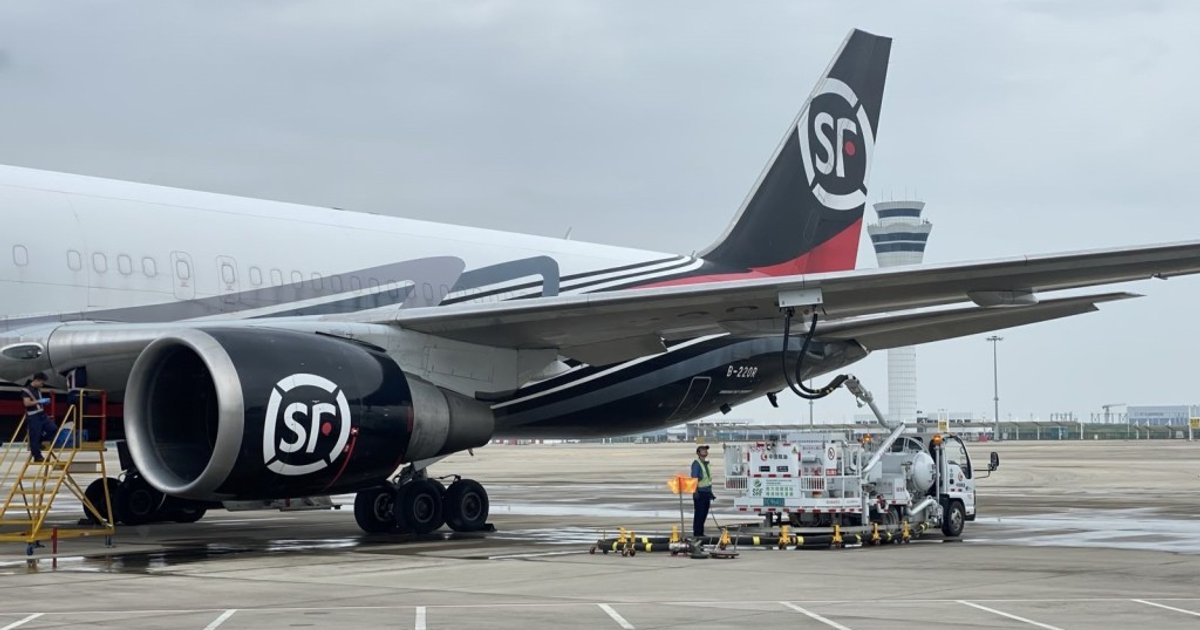
Ecoceres, a renewable fuel producer, announced on Wednesday a strategic partnership with SF Group, China Aviation Oil Group Co., Ltd., and the Second Research Institute of Civil Aviation to launch a commercial sustainable aviation fuel (SAF) refueling project for cargo aircraft. Under the agreement, Ecoceres produces the SAF, which China Aviation Oil blends and supplies to SF Airlines' all-cargo departing flights from Ezhou Huahu International Airport. The initiative aims to achieve up to 90% greenhouse gas emission reductions compared to traditional aviation fuel. This collaboration represents a cross-industry effort linking fuel producers, airlines, and cargo operators to scale SAF adoption in logistics.
Key Points
- Ecoceres, China Aviation Oil, and the Second Research Institute of Civil Aviation formalized the partnership to provide commercial SAF refueling services for SF Airlines' cargo fleet .
- SAF produced at Ecoceres' Zhangjiagang facility is blended by China Aviation Oil before being supplied to SF Airlines' all-cargo departures, enabling up to 90% greenhouse gas reduction versus conventional fuel .
- Ezhou Huahu International Airport, designated as a key hub under China's 14th Five-Year Plan Port Development Plan, serves as the core facility for SAF refueling and operations .
- The project extends Ecoceres' "Project Spark" pilot, which previously verified the entire supply chain from production, transportation, blending, to refueling at Chengdu Shuangliu International Airport .
- An "AnchorTrace" environmental rights platform jointly developed by China Aviation Oil and the Second Research Institute tracks and retires environmental attributes throughout SAF's lifecycle .
Why It Matters
The partnership establishes a replicable and scalable model for low-carbon air cargo development in China, demonstrating how renewable fuel producers, infrastructure suppliers, and logistics operators can collaborate to decarbonize hard-to-abate sectors like aviation. By integrating SAF into existing fuel systems and leveraging transparent environmental tracking, the initiative could accelerate broader adoption of sustainable aviation fuels across the country's aviation and express delivery industries .
The partnership establishes a replicable and scalable model for low-carbon air cargo development in China, demonstrating how renewable fuel producers, infrastructure suppliers, and logistics operators can collaborate to decarbonize hard-to-abate sectors like aviation. By integrating SAF into existing fuel systems and leveraging transparent environmental tracking, the initiative could accelerate broader adoption of sustainable aviation fuels across the country's aviation and express delivery industries .