Undercover OCG Raid Nets 147 in HK$600m Case
SingTao · 4 SOURCESabout 1 hour ago4 MIN
Summary
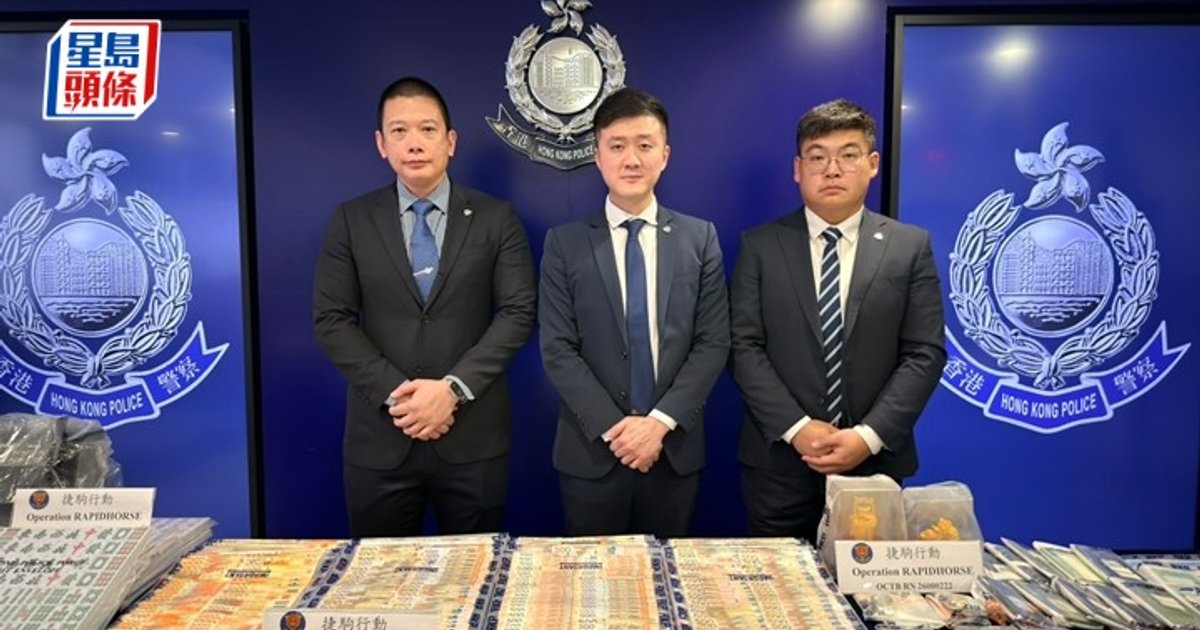
Hong Kong police said an intelligence-led undercover operation by the Organized Crime and Triad Bureau dismantled a triad-linked criminal network active in West Kowloon that allegedly laundered more than HK$600 million in crime proceeds. Over two days on August 7 and 8, officers raided 14 illegal premises and arrested 147 people, including the alleged mastermind, a 56-year-old man surnamed Lee said to have triad links.
Key Points
- The operation, codenamed Swift Steed, was coordinated by the Organized Crime and Triad Bureau and carried out alongside the broader Thunderbolt 2026 crackdown on August 7 and 8.
- Police said the group earned money from drug trafficking, drug manufacturing, drug dens and illegal gambling operations, then moved funds through local stooge accounts using repeated online transfers.
- Raids hit one stooge-account coordination centre in Tsuen Wan, one money-laundering centre in Wong Tai Sin, four drug dens and eight illegal gambling venues across Kowloon and the New Territories.
- Among the 147 arrested were 93 men and 54 women aged 19 to 72; police said 31 had triad backgrounds, including the alleged mastermind, nine core members and other syndicate associates.
- Officers seized about HK$3.65 million in cash and assets worth about HK$1.3 million, including jewellery, watches, vehicles, bank cards, phones, computers, weapons, gambling tools and etomidate vape cartridges.
- Police said the syndicate ran a layered laundering chain with tightly divided roles. Investigators alleged members recruited gamblers, drug users and people seeking quick cash inside illegal venues, paying a few hundred to a few thousand Hong Kong dollars to buy their bank accounts, then taking them to a coordination centre to activate online banking and complete identity verification.
- The login details were then passed to a separate laundering centre, where frequent online transfers were used to disguise the source of funds. If a bank froze an account, the group allegedly abandoned it, arranged for the holder to report it lost, and replaced it with a new account.
- Police said the mastermind stayed away from the illegal premises and handled neither cash nor transfers directly, instead issuing instructions through trusted intermediaries in what officers described as a compartmentalised management structure designed to frustrate investigators. According to investigators, trusted aides broke up daily cash takings into deposits below reporting thresholds, fed them into stooge accounts through ATMs, then split and recombined the money before routing the cleaned funds into accounts held by the mastermind's relatives or girlfriend.
- In the first phase of the operation, officers arrested seven people at the Tsuen Wan coordination centre, including two syndicate members and five stooge-account holders, and seized about 56 bank cards belonging to other people at the Wong Tai Sin laundering centre. In parallel arrests across Hong Kong, police detained the alleged mastermind, nine core members and 10 other syndicate members, and recovered more than 100 etomidate cartridges, about HK$3.1 million in cash, five watches and jewellery from homes linked to suspects.
- In the second phase, police targeted the syndicate's revenue sources by raiding 12 drug dens and illegal gambling venues in Kowloon and the New Territories, arresting 116 people and seizing about HK$550,000 in cash, drugs, gambling paraphernalia and offensive weapons. Police said 11 people have been charged with operating gambling establishments and running drug dens, while two others are to be provisionally charged with manufacturing dangerous drugs and trafficking in dangerous drugs.
Why It Matters
The case shows how illegal gambling and drug operations can be tied directly to a structured laundering network that exploits ordinary bank account holders for small payments. It also points to continued police focus on cutting off criminal cash flow at every stage, from street-level vice operations to the final movement of funds into associates' personal accounts.