Youth Climate Group Urges Hong Kong to Overhaul Labor Protection Amid Rising Extreme Heat
HK01 · 1 SOURCESabout 1 hour ago2 MIN
Summary
A youth climate advocacy group has published a research report calling on the Hong Kong government to establish a clear, enforceable heat stress management framework for outdoor workers. The report warns that current protections relying on verbal reminders and employer discretion are insufficient as extreme heat becomes more frequent. Researchers argue that treating heat as a systemic labor safety issue rather than a weather complaint is essential for protecting the city's most vulnerable workers.
Key Points
- The "Youth Climate Advocacy Training Programme 2026" advocacy working group released its report in July on protecting outdoor laborers during hot weather conditions
- The report reframes heat stress from a meteorological concern into a structural labor safety issue requiring institutional policy responses
- Current Hong Kong protections rely excessively on employer self-regulation, verbal warnings, and ad hoc on-site coordination rather than mandatory standards
- The report compares Hong Kong unfavorably with other high-temperature regions that mandate protective measures—such as hydration breaks, shaded rest areas, and work schedule adjustments—when heat indices reach specific thresholds
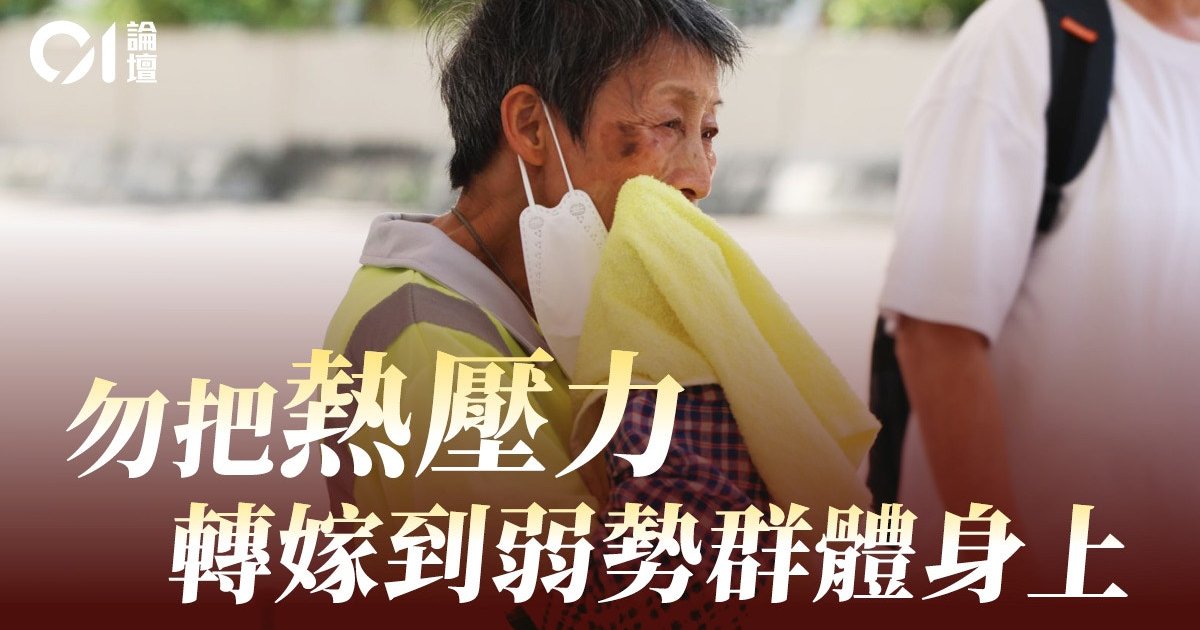
- Heat risks disproportionately affect outdoor construction, street cleaning, logistics, and maintenance workers who have the least bargaining power
Why It Matters
Hong Kong depends heavily on outdoor labor for essential city functions, yet heat protection remains inconsistent and employer-dependent. If the government fails to institutionalize heat stress management as climate conditions worsen, the burden of extreme heat will continue to fall on the most economically vulnerable workers—the very people keeping the city operational. This report positions heat stress protection not as an employee benefit but as a core component of urban governance and climate justice.
Hong Kong depends heavily on outdoor labor for essential city functions, yet heat protection remains inconsistent and employer-dependent. If the government fails to institutionalize heat stress management as climate conditions worsen, the burden of extreme heat will continue to fall on the most economically vulnerable workers—the very people keeping the city operational. This report positions heat stress protection not as an employee benefit but as a core component of urban governance and climate justice.