Linda Chung's 'Busy' Blessing Sparks Viral Backlash and Parody Trend
SingTao · 1 SOURCESabout 2 hours ago6 MIN
Summary
Hong Kong actress Linda Chung Ka-yan ignited an online firestorm after gifting audience members the character 「忙」(busy) during her recent concert, accompanied by a feel-good speech declaring that busyness represents proof of living. The well-meaning blessing backfired spectacularly as netizens and working-class Hong Kongers roundly condemned her remarks as detached from reality. The controversy has since evolved into a viral "character gifting" phenomenon, with major brands and internet personalities capitalizing on the trending topic.
Key Points
- Linda Chung presented the character 「忙」(busy) on a transparent board during her concert, delivering a "chicken soup" style speech about how being busy signifies being alive .
- The blessing faced immediate backlash online, with critics calling her comments "out of touch" and comparing the remark to a curse for professions like healthcare and funeral workers where excessive busyness means greater suffering .
- Some netizens defended the actress, arguing that for entertainers, not being busy equates to being out of work, while others used the controversy to question her financial status and marriage .
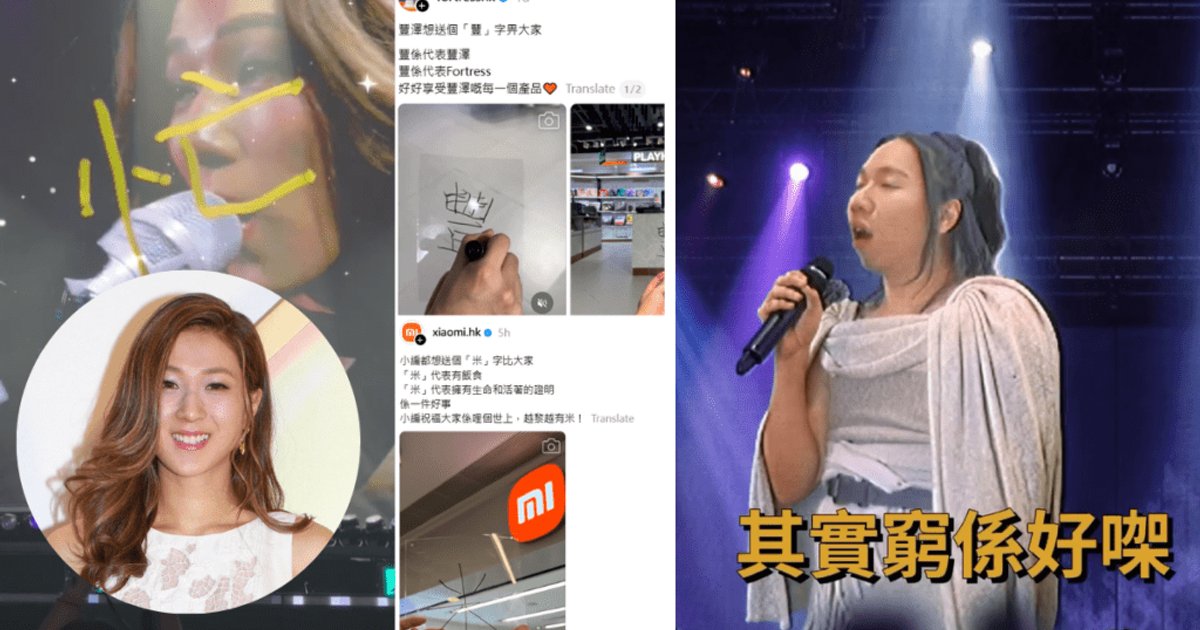
- Electronics retailer Fortress jumped on the trend by posting their own transparent board with the brand-related character 「豐」(abundant), while Xiaomi Hong Kong released a video giving away 「米」(rice/money) with a pun on becoming more prosperous .
- Influencer Kwan Moon (21kwanmoon) produced the most viral parody, imitating Chung's concert styling and stage lighting to deliver a satirical speech about the character 「窮」(poor), jokingly wishing everyone "the poorer the better" and explaining the gift as "relatively less hopeless" .
Why It Matters
The controversy exposes the widening gap between celebrity lifestyles and the everyday realities faced by Hong Kong's working class during uncertain economic times. This viral moment has become a case study in how internet culture transforms celebrity missteps into participatory entertainment, with brands and creators alike leveraging the discourse to stay culturally relevant. The strength of the backlash reflects broader societal frustrations that resonate far beyond this single incident.
The controversy exposes the widening gap between celebrity lifestyles and the everyday realities faced by Hong Kong's working class during uncertain economic times. This viral moment has become a case study in how internet culture transforms celebrity missteps into participatory entertainment, with brands and creators alike leveraging the discourse to stay culturally relevant. The strength of the backlash reflects broader societal frustrations that resonate far beyond this single incident.