Beyblade Battles Revive Hong Kong Mall Traffic as Toy Trend Sweeps Asia
SCMP · 1 SOURCESabout 1 hour ago2 MIN
Summary
The classic spinning-top toy Beyblade has made a dramatic comeback in Hong Kong and across Asia, with shopping malls capitalising on the trend by setting up free battle arenas to attract customers. Tuen Mun Town Plaza has reported a 20 per cent surge in holiday foot traffic and a 10 to 15 per cent rise in weekday attendance since launching the promotion strategy. Retail analysts see the Beyblade phenomenon as a potential model for how malls can engage shoppers through shared hobbies rather than direct selling.
Key Points
- Beyblade tournaments and battle arenas have appeared in shopping centres across Hong Kong, including Tuen Mun Town Plaza in the New Territories
- Sino Group, which owns Tuen Mun Town Plaza, encouraged tenants to participate in Beyblade games and offer discounts to customers who present their tops
- Bella Chhoa Peck-lim, chief commercial officer of Sino Group, described the strategy as a "soft-selling approach" that draws customers into stores through conversation rather than direct sales pitches
- The toy, popularised by Japanese anime in the early 2000s, saw renewed interest emerge across Asia early this year, driving demand for hot models and rare parts
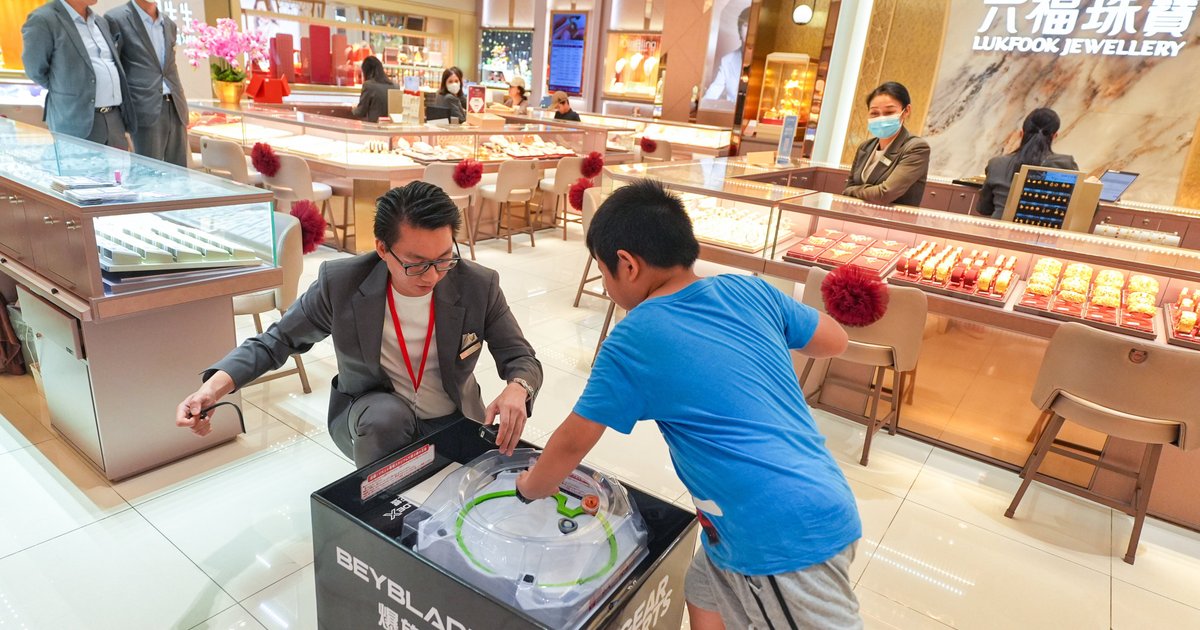
- Beyblade battles at the mall involve players competing at plastic "Beystadium" arenas, with some challenging shop staff to collect stamps for shopping vouchers
Why It Matters
The Beyblade strategy represents a potential lifeline for Hong Kong's retail and catering sectors, which have struggled with residents increasingly travelling to mainland China for cheaper shopping and dining options . Mall operators are watching closely to see whether the initial 20 per cent traffic surge can be sustained beyond the tournament season and whether similar hobby-based marketing tactics could be applied to other toy and entertainment categories.
The Beyblade strategy represents a potential lifeline for Hong Kong's retail and catering sectors, which have struggled with residents increasingly travelling to mainland China for cheaper shopping and dining options . Mall operators are watching closely to see whether the initial 20 per cent traffic surge can be sustained beyond the tournament season and whether similar hobby-based marketing tactics could be applied to other toy and entertainment categories.