USS George Washington Rushed to Middle East Leaves Pacific Power Vacuum for China
Bastillepost · 1 SOURCESabout 2 hours ago2 MIN
Summary
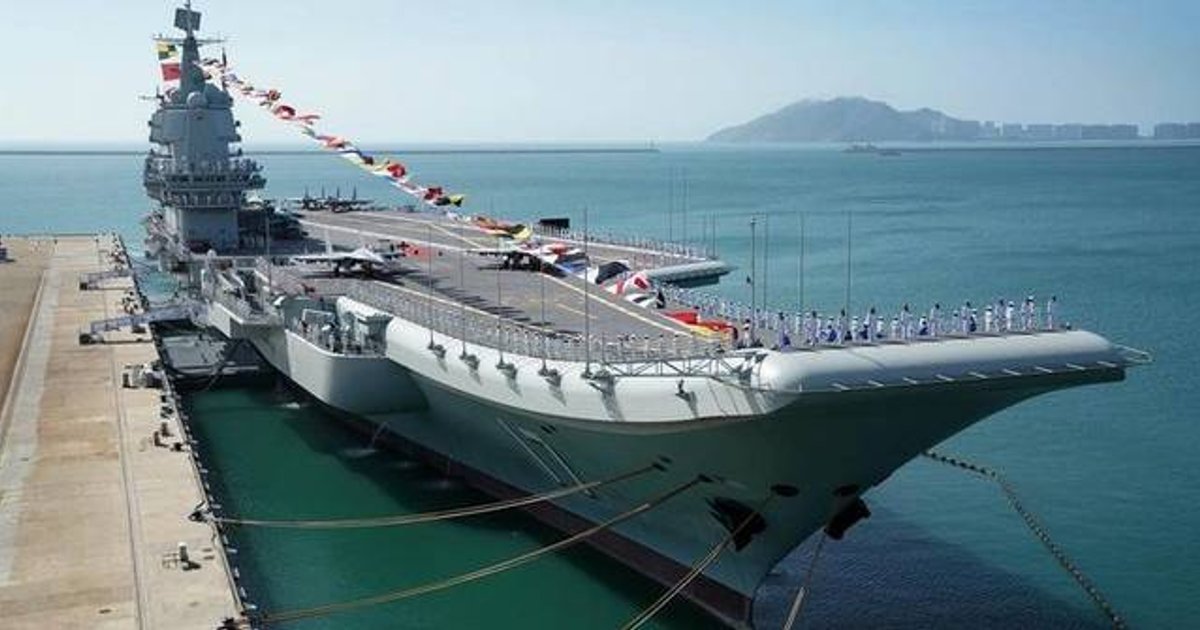
The USS George Washington has been dispatched urgently to the Middle East to relieve the overextended USS Abraham Lincoln, creating a temporary power vacuum in the Western Pacific where three Chinese aircraft carriers will now operate unopposed. The deployment crisis highlights chronic maintenance challenges facing the US Navy, which possesses 11 carriers yet struggles to maintain adequate operational availability. The situation has prompted the Associated Press to report that China is exploiting the strategic opening left by American commitments in the Middle East.
Key Points
- The USS Lincoln has completed over 240 days of continuous deployment in the Middle East, leaving sailors physically and mentally exhausted
- The USS George Washington's hasty departure to the Middle East means no US aircraft carrier will be present in the Western Pacific
- China now has three carriers operating in the Western Pacific: the Liaoning, the Shandong, and the Fujian currently undergoing sea trials
- Recent Chinese military activities include naval exercises with Indonesia, drills near Huangyan Island, and live-fire exercises near Japan's Okinotorishima reef
- US Defense Secretary Pete Hegseth and President Donald Trump, advised by Joint Chiefs Chairman General Charles Brown, pursued Middle East conflicts over strategic focus on China
Why It Matters
The carrier gap exposes a critical vulnerability in US Indo-Pacific strategy: with American military resources stretched thin across multiple theaters, regional allies in Japan and the Philippines may face increased pressure from an emboldened Chinese naval presence. This dynamic could fundamentally reshape security calculations throughout the Western Pacific, forcing Washington to make difficult choices about where to deploy increasingly scarce carrier assets .
The carrier gap exposes a critical vulnerability in US Indo-Pacific strategy: with American military resources stretched thin across multiple theaters, regional allies in Japan and the Philippines may face increased pressure from an emboldened Chinese naval presence. This dynamic could fundamentally reshape security calculations throughout the Western Pacific, forcing Washington to make difficult choices about where to deploy increasingly scarce carrier assets .