Education Council urges IDSE, AI hires, history reform
SingTao · 1 SOURCESabout 1 hour ago4 MIN
Summary
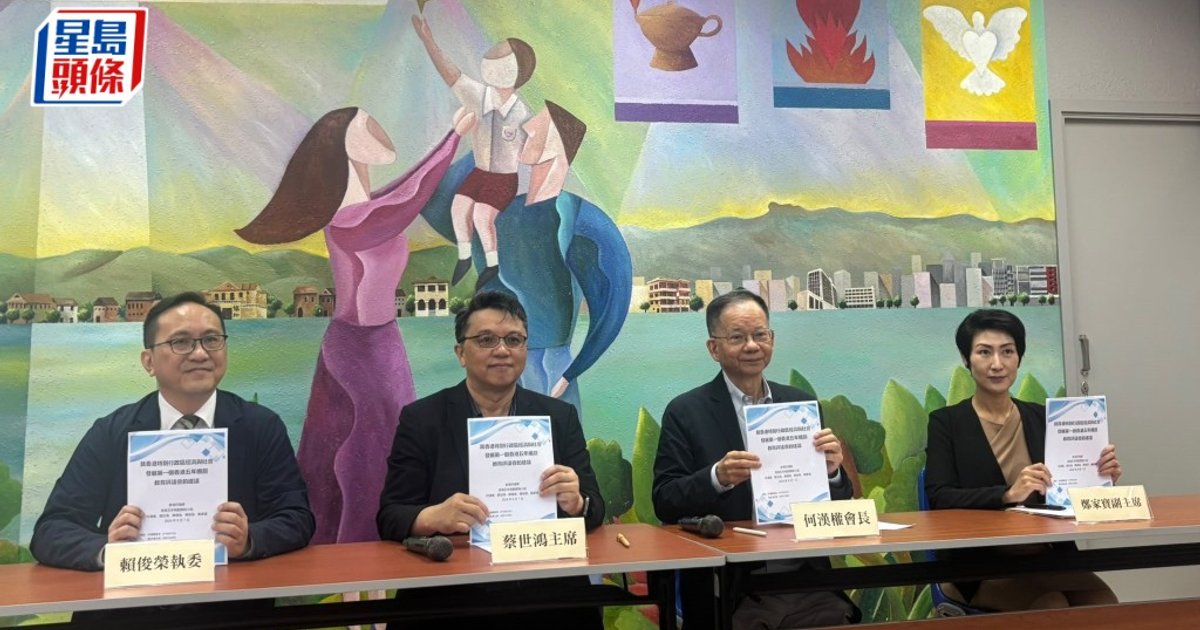
With the public consultation for Hong Kong’s first five-year plan ending on Friday, August 14, the Education Convergence held a press conference on August 12 to submit detailed proposals for the education sector. It set out five development directions covering falling school-age population, patriotic education, digital and vocational education, a proposed International Diploma of Secondary Education, or IDSE, and deeper reform of teacher professional management. The group said the package is meant to turn demographic pressure and curriculum bottlenecks into opportunities to raise quality and strengthen Hong Kong’s role as an education hub
Key Points
- Chairman Choi Sai-hung said uneven district demographics require boundary fine-tuning and a district-based dynamic places mechanism with annual rolling five-year forecasts
- To attract students, the group proposed easing student-visa access for Greater Bay Area children and expanding recruitment from ASEAN, the Middle East and Belt and Road countries
- For school restructuring, it backed an “open door plus upgraded merger” approach, stressing stronger-weaker school pairings while letting students remain in their home districts
- Vice-chairman Cheng Ka-po suggested hiring mainland computer or AI graduates under a model similar to the NET Scheme, at about HK$20,000 monthly
- President Ho Hon-kuen said Chinese History should become a compulsory standalone subject from Secondary One to Secondary Six, assessed by schools rather than public exams
- The council also said current mainland study tours under Citizenship and Social Development are too superficial and should be upgraded into project-based and immersive programmes, including weeks-long placements in Greater Bay Area technology firms and national key laboratories. It proposed adding China’s Space Day, an annual election of Chinese historical figures and commemorations for the National Memorial Day for Nanjing Massacre victims to a regular patriotic education calendar
- On vocational and higher education, the group called for building “universities of applied sciences” as a third pathway in higher education, linking secondary school through to master’s degrees and challenging the traditional mindset that academic university entry is the only desirable route. It also urged the government to bring in domestic and overseas technology giants to develop an AI education platform suited to Hong Kong’s bilingual environment and international standards
- On the proposed IDSE, the council said the exam would address a long-standing barrier facing non-Chinese-speaking students and some local elite-school students who avoid the Hong Kong Diploma of Secondary Education because of the Chinese-language requirement. It proposed IB-style tiered language assessment, with native-language and second-language modules in both Chinese and English, allowing overseas candidates to take a practical and academic Chinese Language B paper. The council also suggested setting up official test centres in Belt and Road countries and across the Greater Bay Area to build IDSE into an Asian examination brand with Chinese characteristics
- The submission further called for revising grant rules to give school sponsoring bodies and principals greater legally effective autonomy over teacher hiring and contract renewal, while creating more layered promotion ladders tied to performance, digital teaching innovation and contributions to school development
Why It Matters
If adopted, the proposals would reshape how Hong Kong schools recruit students, teach national identity, and assess language ability across local and international tracks. They also point to a more interventionist education strategy, linking school reform with talent attraction, the Northern Metropolis, and Hong Kong’s positioning in the Greater Bay Area and Belt and Road networks