Joint School Science Exhibition Showcases Student Innovation in Drug Recycling and Assistive Devices
SingTao · 1 SOURCESabout 2 hours ago5 MIN
Summary
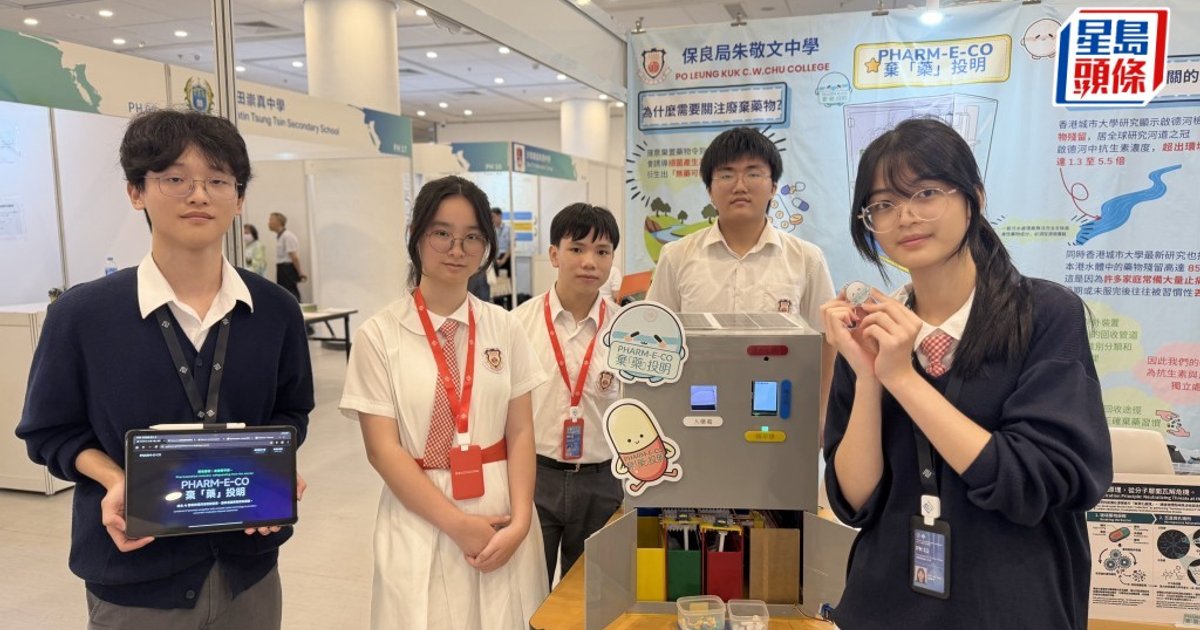
The 59th Joint School Science Exhibition officially opened with participation from 22 secondary schools across Hong Kong . Among the standout projects, students from Po Leung Kuk Chu Kwun Secondary School unveiled Pharm-E-co, an intelligent drug recycling and disposal system designed to tackle the growing problem of household pharmaceutical waste. The team from Belilios Public School earned the Best Project Award second runner-up for developing "聲耀" (Sound Glory), smart glasses that transform ambient sounds into color-coded visual alerts for individuals with hearing impairments .
Key Points
- The Pharm-E-co system employs YOLO AI visual algorithms to automatically identify medication types including antibiotics and non-steroidal anti-inflammatory drugs, then grinds and processes them for safe disposal
- For highly polluting medications such as ibuprofen, the device utilizes activated carbon adsorption technology to break down drug活性components before final disposal
- Users earn points through the integrated smartphone application when depositing medications, which can be redeemed for merchandise keychains, creating a gamified incentive system
- The Belilios Public School team designed their smart glasses to differentiate danger levels through color coding: red for fire alarms and vehicle horns, white for approaching ambulances, and green for doorbells
- The assistive device costs only HK$400 to produce, significantly lower than existing market alternatives, making it more accessible for users with hearing impairments
Why It Matters
These student innovations directly address real-world challenges facing Hong Kong: improper medication disposal contaminates waterways and ecosystems, while the hearing-impaired community lacks affordable assistive technology that can distinguish between various environmental hazards . The projects also demonstrate how young people are engaging with United Nations Sustainable Development Goals through practical technological solutions, potentially inspiring future generations of innovators in the city.
These student innovations directly address real-world challenges facing Hong Kong: improper medication disposal contaminates waterways and ecosystems, while the hearing-impaired community lacks affordable assistive technology that can distinguish between various environmental hazards . The projects also demonstrate how young people are engaging with United Nations Sustainable Development Goals through practical technological solutions, potentially inspiring future generations of innovators in the city.