Chinese Humanoid Robots Shatter Usain Bolt's 100m Record at Beijing Games
Thestandard · 2 SOURCESabout 1 hour ago2 MIN
Summary
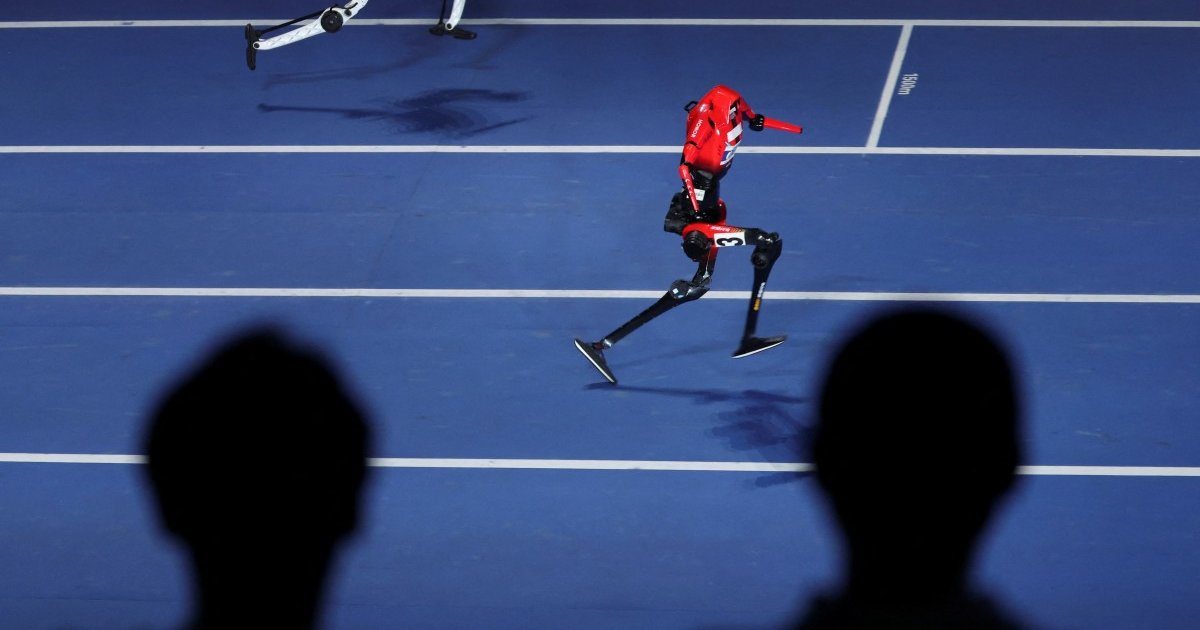
At the opening of the second World Humanoid Robot Games in Beijing on August 22, 2026, the Tiangong Ultra humanoid robot completed the 100 metres in 9.39 seconds, beating Usain Bolt's 9.58-second human world record. The robot, developed by the Beijing Humanoid Robot Innovation Center, edged out Honor's Lightning robot, which finished in 9.47 seconds—both faster than the Jamaican sprinter's 2009 Berlin mark. The competition featured 666 teams from 16 countries across six continents with 2,056 robots competing in 51 events at the National Speed Skating Oval. Researchers noted the robots improved dramatically from last year's inaugural games, when Tiangong Ultra won the 100 metres in 21.50 seconds. The games also showcased a standing vertical jump of 2.8843 metres by Tiangong Ultra, exceeding the human world record of 2.45 metres, though officials clarify these are competition-specific achievements outside World Athletics jurisdiction.
Key Points
- Tiangong Ultra, developed by the Beijing Humanoid Robot Innovation Center, won its heat in 9.39 seconds, surpassing Usain Bolt's 9.58-second record
- Honor's Lightning robot finished second in 9.47 seconds; in preparatory tests it ran 9.32 seconds at peak speed of 14.5 m/s
- The second edition of the games at National Speed Skating Oval features 666 teams from 16 countries with 2,056 robots competing in 51 events
- Events increased from 26 to 51 compared to last year's inaugural games, adding track and field, table tennis, and weightlifting
- Tiangong Ultra also achieved a standing vertical jump of 2.8843 metres, outperforming the human men's record of 2.45 metres
Why It Matters
These results demonstrate the rapid advancement of humanoid robotics, with the 100-metre time improving by more than half from last year's inaugural event . The shift to fully autonomous operation—robots now navigate and decide actions using their own sensing systems and AI models—marks a significant leap in real-world robot capabilities beyond controlled laboratory environments . For Hong Kong, this underscores the growing strategic importance of humanoid robotics in regional tech competition, particularly as mainland China accelerates development of autonomous systems that could reshape manufacturing, services, and mobility industries.
These results demonstrate the rapid advancement of humanoid robotics, with the 100-metre time improving by more than half from last year's inaugural event . The shift to fully autonomous operation—robots now navigate and decide actions using their own sensing systems and AI models—marks a significant leap in real-world robot capabilities beyond controlled laboratory environments . For Hong Kong, this underscores the growing strategic importance of humanoid robotics in regional tech competition, particularly as mainland China accelerates development of autonomous systems that could reshape manufacturing, services, and mobility industries.