Tokyo-Abu Dhabi Flight Diverts to Hong Kong After Passenger's Suspected Stroke
HK01 · 1 SOURCESabout 1 hour ago5 MIN
Summary
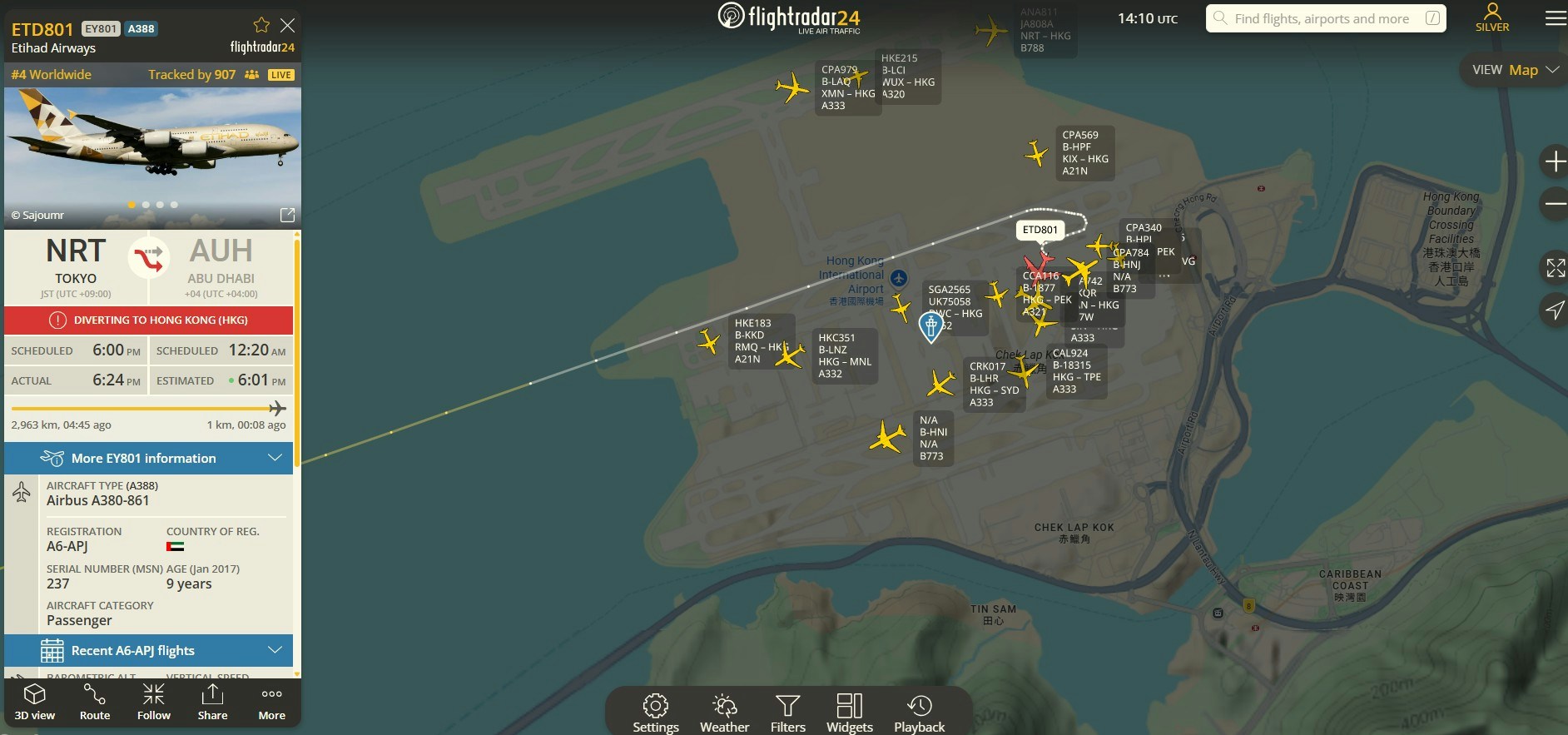
An Etihad Airways (阿提哈德航空) Airbus A380 aircraft operating Flight EY801 from Tokyo to Abu Dhabi executed an emergency diversion to Hong Kong International Airport on Tuesday evening, September 24, after an 81-year-old male passenger suffered a suspected acute stroke approximately three hours into the flight. The captain made the critical decision to divert to the nearest suitable airport after cabin crew reported the medical emergency. Due to the aircraft carrying excessive fuel from its long-haul route, fire safety crews were placed on standby alongside medical services. The passenger received emergency treatment upon landing, and the flight departed for Abu Dhabi approximately two and a half hours later.
Key Points
- The incident occurred on Etihad Airways Flight EY801, an Airbus A380 carrying approximately 500 passengers
- An 81-year-old male passenger suffered a suspected acute stroke while the aircraft was flying over Wuhan airspace
- The aircraft's fuel load exceeded Maximum Landing Weight (MLW) due to the long-haul flight distance, prompting fire truck deployment
- The Airbus A380 landed safely on Hong Kong International Airport's middle runway at approximately 10:00 pm on September 24
- Medical personnel provided emergency treatment to the passenger, and the flight resumed its journey at around 00:30 on September 25
Why It Matters
This incident highlights Hong Kong International Airport's critical role as a regional aviation hub capable of handling emergency diversions with rapid medical response capabilities. The successful coordination between Etihad Airways, Hong Kong airport authorities, and emergency services underscores the importance of preparedness for in-flight medical emergencies, particularly on long-haul routes where elderly passengers may be at higher risk of acute health events .
This incident highlights Hong Kong International Airport's critical role as a regional aviation hub capable of handling emergency diversions with rapid medical response capabilities. The successful coordination between Etihad Airways, Hong Kong airport authorities, and emergency services underscores the importance of preparedness for in-flight medical emergencies, particularly on long-haul routes where elderly passengers may be at higher risk of acute health events .