Survey says many workers lack heat protection
RTHK · 2 SOURCESabout 1 hour ago2 MIN
Summary
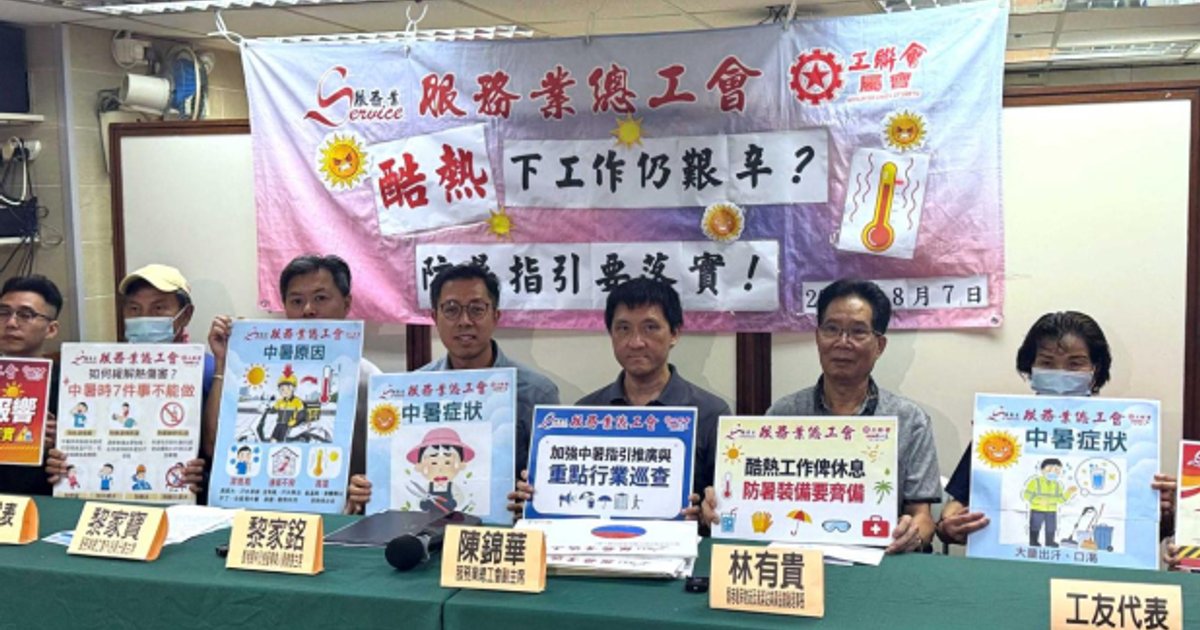
A survey by the Service Industry General Union found significant gaps in employers’ heat protection measures for frontline and outdoor workers in Hong Kong, as extreme hot weather returns . Around 40% of respondents said employers had made no changes at all to work arrangements under heatstroke prevention guidelines, and 43.6% said no protective gear such as sun hats, cooling towels or fans was provided . The survey covered more than 500 workers from sectors including cleaning, landscaping, tree work and food delivery, and more than half said they had suffered heat-related symptoms, with some collapsing and being hospitalised . The union is calling for stronger legal protection, stricter enforcement of heat warning rest arrangements, and mandatory standards for outdoor work in high temperatures .
Key Points
- The union launched the questionnaire survey in mid-April and interviewed more than 500 workers, including cleaners, landscaping and tree workers, and delivery couriers .
- About 40% of respondents said employers had completely failed to update work arrangements according to heatstroke prevention guidelines during hot weather .
- Some 43.6% said employers provided no heat-relief equipment, while 37.3% said no extra rest time was arranged in extremely hot conditions .
- More than half of surveyed workers reported heatstroke symptoms such as dizziness and headaches, and some even fainted and were sent to hospital .
- The union proposed classifying heatstroke as a compensable occupational disease and creating legally binding work-hour and rest standards for outdoor labour .
Why It Matters
The findings point to a gap between official heat guidance and actual workplace practice for lower-paid outdoor and service workers, especially as temperatures are forecast to reach 36 degrees Celsius . They also raise questions about whether current arrangements rely too heavily on voluntary employer compliance rather than enforceable standards, inspections and penalties .