South Korea Plans Anti-Dumping Duties on Sodium Hydroxide from China, Taiwan
SingTao · 1 SOURCESabout 1 hour ago2 MIN
Summary
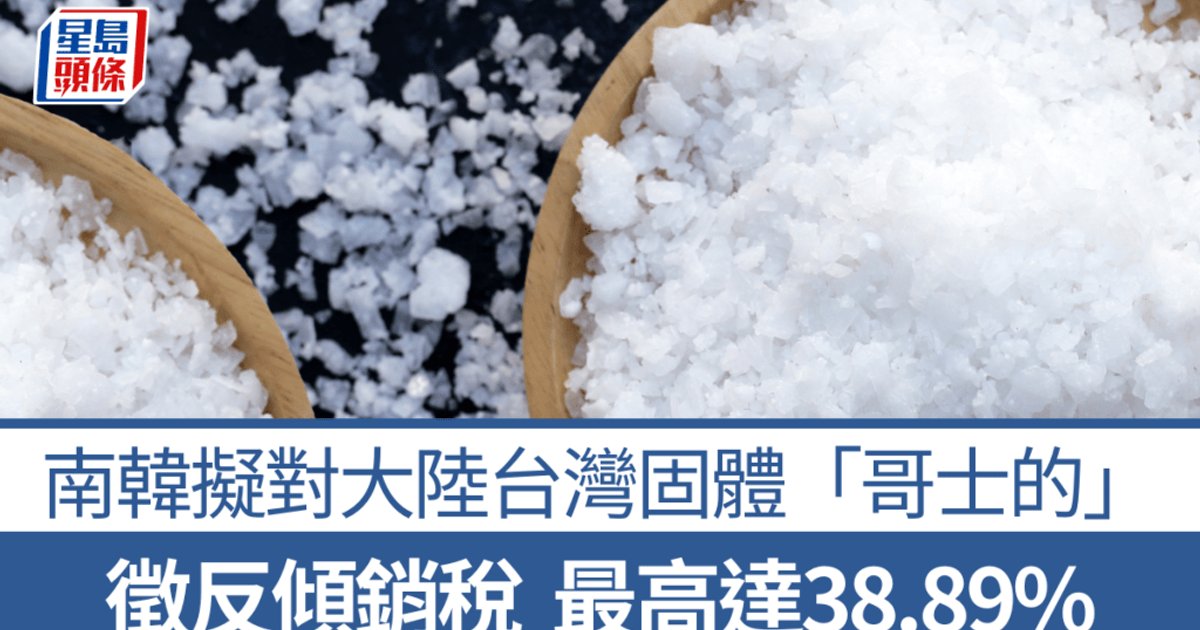
South Korea's Trade Commission has confirmed that solid sodium hydroxide imported from mainland China and Taiwan is being dumped into the Korean market at predatory prices, causing material harm to domestic producers. The commission is recommending anti-dumping duties ranging from 3.66% to 22.21% for mainland Chinese suppliers and a steep 38.89% rate for Taiwanese companies including Formosa Plastics. The investigation launched in April 2024 after a local Korean chemical manufacturer filed a formal complaint in March, marking a significant escalation in trade enforcement measures.
Key Points
- Mainland Chinese suppliers face anti-dumping duties of 3.66% to 22.21%, with rates varying by company
- Taiwan's Formosa Plastics and other suppliers would face a significantly higher rate of 38.89%
- The investigation began in April after a South Korean company filed a dumping complaint in March
- Solid sodium hydroxide (NaOH) is used in soap manufacturing, detergents, textiles, and paper production
- The Trade Commission concluded that dumped imports caused actual injury to domestic sodium hydroxide producers
Why It Matters
The proposed duties could significantly reshape chemical trade flows in Northeast Asia, with Taiwanese exporters facing the steepest barriers. For Hong Kong businesses importing sodium hydroxide products, these tariffs may affect regional supply chains and pricing, as manufacturers may need to adjust sourcing strategies or pass increased costs to downstream industries including soap production, textile processing, and paper manufacturing.
The proposed duties could significantly reshape chemical trade flows in Northeast Asia, with Taiwanese exporters facing the steepest barriers. For Hong Kong businesses importing sodium hydroxide products, these tariffs may affect regional supply chains and pricing, as manufacturers may need to adjust sourcing strategies or pass increased costs to downstream industries including soap production, textile processing, and paper manufacturing.