Japan leaders mark WWII anniversary with Yasukuni visits amid regional tension
SCMP · 2 SOURCESabout 1 hour ago2 MIN
Summary
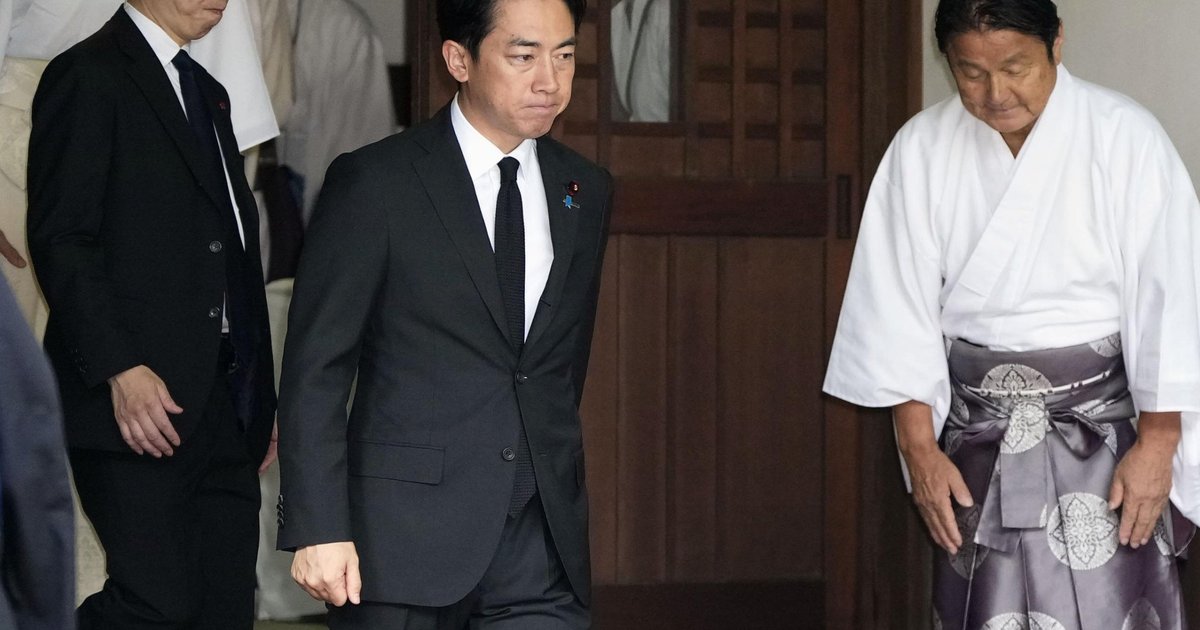
Japanese Prime Minister Sanae Takaichi sent a ritual offering to the Yasukuni Shrine in Tokyo on Saturday while Defence Minister Shinjiro Koizumi conducted an in-person visit, marking the 81st anniversary of Japan's unconditional surrender in World War II. The dual actions underscored the continuing controversy surrounding the Shinto shrine, which honours 14 convicted Japanese Class-A war criminals from the wartime era. Multiple senior officials from the ruling Liberal Democratic Party joined the observances, drawing immediate criticism from China and South Korea.
Key Points
- Prime Minister Takaichi, as LDP president, paid for the ritual offering from her own pocket, sources said, despite having visited the shrine personally before taking office last October
- Defence Minister Koizumi became the first sitting defence minister to visit Yasukuni on the WWII anniversary since Minoru Kihara on August 15, 2024; Kihara now serves as chief cabinet secretary
- Cabinet member Hitoshi Kikawada, who handles issues related to the Northern Territories disputed with Russia, also visited the shrine on Saturday
- Senior LDP executives who visited included secretary general Shunichi Suzuki, general council head Haruko Arimura, and election strategy committee head Yasutoshi Nishimura
- Yasukuni Shrine, located in Tokyo's Chiyoda Ward, has long been a source of diplomatic friction between Japan and its neighbours China and South Korea
Why It Matters
The parallel actions by Takaichi and Koizumi highlight the delicate balance Japan's conservative government maintains between honouring war dead and managing diplomatic relations with neighbouring nations that suffered under Japanese aggression. As Japan continues strengthening its defence capabilities under its war-renouncing constitution amid an increasingly severe security environment, such visits risk deepening historical grievances that could complicate regional security cooperation .
The parallel actions by Takaichi and Koizumi highlight the delicate balance Japan's conservative government maintains between honouring war dead and managing diplomatic relations with neighbouring nations that suffered under Japanese aggression. As Japan continues strengthening its defence capabilities under its war-renouncing constitution amid an increasingly severe security environment, such visits risk deepening historical grievances that could complicate regional security cooperation .