Education key as Hong Kong end-of-life law begins
SCMP · 1 SOURCESabout 1 hour ago2 MIN
Summary
Hong Kong has brought into force a landmark end-of-life law that lets mentally capable adults formally state in advance that they refuse specified life-sustaining treatments if they later lose decision-making capacity . The Advance Decision on Life-sustaining Treatment Ordinance took effect on July 31 after an 18-month preparation period following its passage in late 2024 . The measure is intended to support dignified care, but its success will depend on education, communication and confident implementation by frontline responders and medical staff .
Key Points
- The ordinance allows adults with mental capacity to sign advance medical directives refusing treatments such as blood transfusions, artificial nutrition and hydration .
- These directives only apply after a patient loses mental capacity and enters conditions including persistent vegetative state, irreversible coma or life-limiting illness .
- Hong Kong delayed implementation for 18 months so hospitals, emergency services and frontline medical workers could prepare operationally for the new framework .
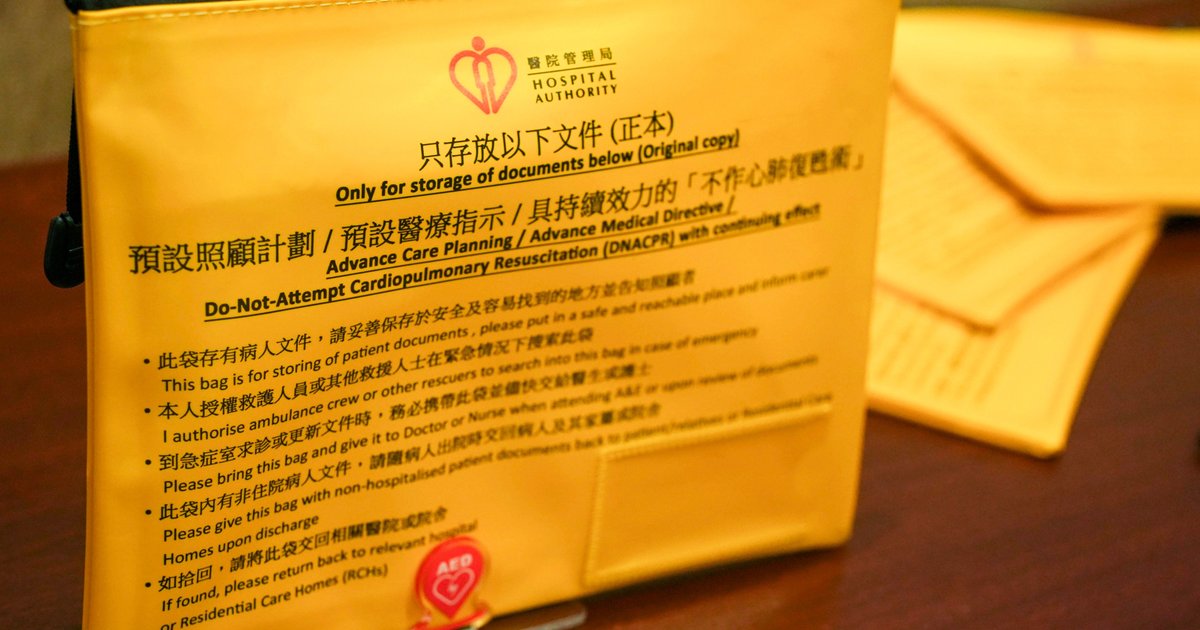
- The law also formalises DNACPR orders in non-hospital settings, extending end-of-life instructions beyond wards and clinics into community emergencies .
- DNACPR orders do not apply when arrest may be linked to suspected suicide, homicide or an accident, preserving emergency intervention in acute cases .
Why It Matters
The ordinance addresses a long-standing reluctance in many communities to discuss death openly, giving patients more control over end-of-life care while reducing uncertainty for families and clinicians . But emergency workers still face pressure verifying patient wishes in split-second situations, so sustained training and public understanding will be essential if the law is to benefit all .