Devil Rays Still Spotted in Tai Po River; Market Denies Selling Caught Fish After Mass Harvest
HK01 · 9 SOURCESabout 1 hour ago6 MIN
Summary
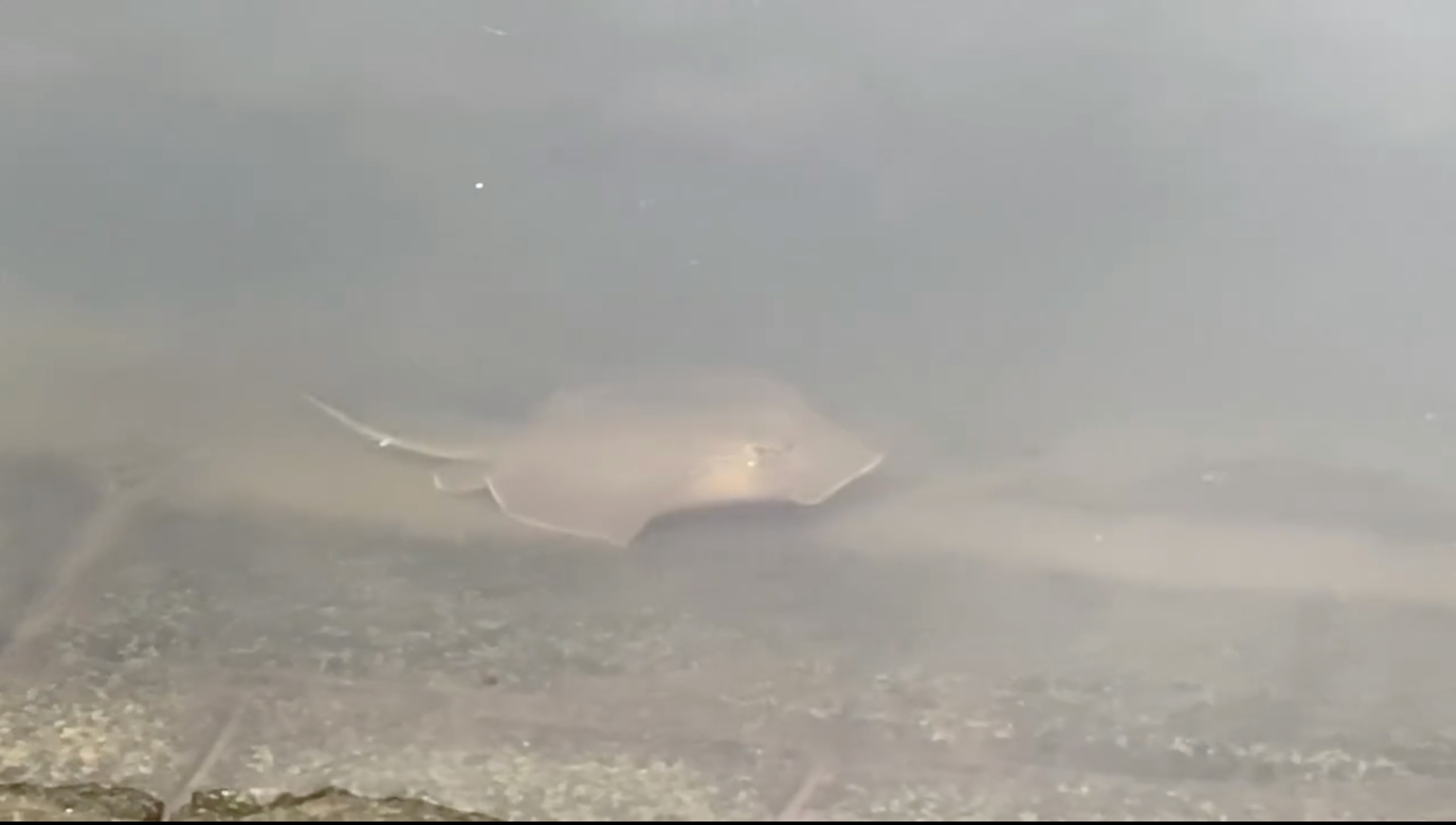
A school of red stingrays, locally known as devil rays, continued appearing in Tai Po's Lam Tsuen River on September 4, the day after mass sightings near Kwong Fuk Bridge attracted both curious onlookers and aggressive fishermen who documented catches of up to nine rays at a time. Hong Kong Fish Society President Chong Dai-wah (莊棣華) confirmed the species as the red stingray and emphasized that the creatures are unsuitable for consumption due to high ammonia content, while also reproducing at alarmingly low rates. Fish vendors at Tai Po Market told Sing Tao they would not purchase rays of unknown origin, with prices hovering between HK$16 and HK$32 per jin. The incident has sparked public debate about overfishing, with netizens questioning why anyone would catch fish they have no intention of eating.
Key Points
- At least five to nine devil rays were observed swimming in shallow waters near Kwong Fuk Bridge on September 3, with multiple videos capturing the creatures gracefully moving near the riverbank .
- Multiple fishermen were documented catching rays within approximately 10 minutes, with one angler reportedly capturing at least five rays and another using a small boat to scoop up at least nine rays .
- Hong Kong Fish Society President Chong Dai-wah (莊棣華) identified the species as the red stingray, explaining that recent fishing moratoriums and increased water flow from rainy days likely prompted the rays to enter the river to forage .
- Chong warned that red stingrays contain high levels of ammonia and urea, producing a strong urine-like odor when cooked, making them unsuitable for human consumption .
- The expert emphasized that red stingrays have venomous tail spines with serrated edges and reproduce slowly, with females typically giving birth to only one to ten pups per litter, making overharvesting particularly harmful .
Why It Matters
The mass appearance of devil rays in an urban river highlights both the success of Hong Kong's fishing conservation policies and the ongoing need for public education about marine biodiversity. Experts view this as an opportunity for environmental awareness, encouraging citizens to appreciate aquatic life and let fish return to their natural habitat rather than exploit declining wild populations that remain at critically low levels compared to historical records .
The mass appearance of devil rays in an urban river highlights both the success of Hong Kong's fishing conservation policies and the ongoing need for public education about marine biodiversity. Experts view this as an opportunity for environmental awareness, encouraging citizens to appreciate aquatic life and let fish return to their natural habitat rather than exploit declining wild populations that remain at critically low levels compared to historical records .