Stephen Chow Shifts Stance on Shaolin Trademark After 25 Years
SingTao · 1 SOURCESabout 1 hour ago2 MIN
Summary
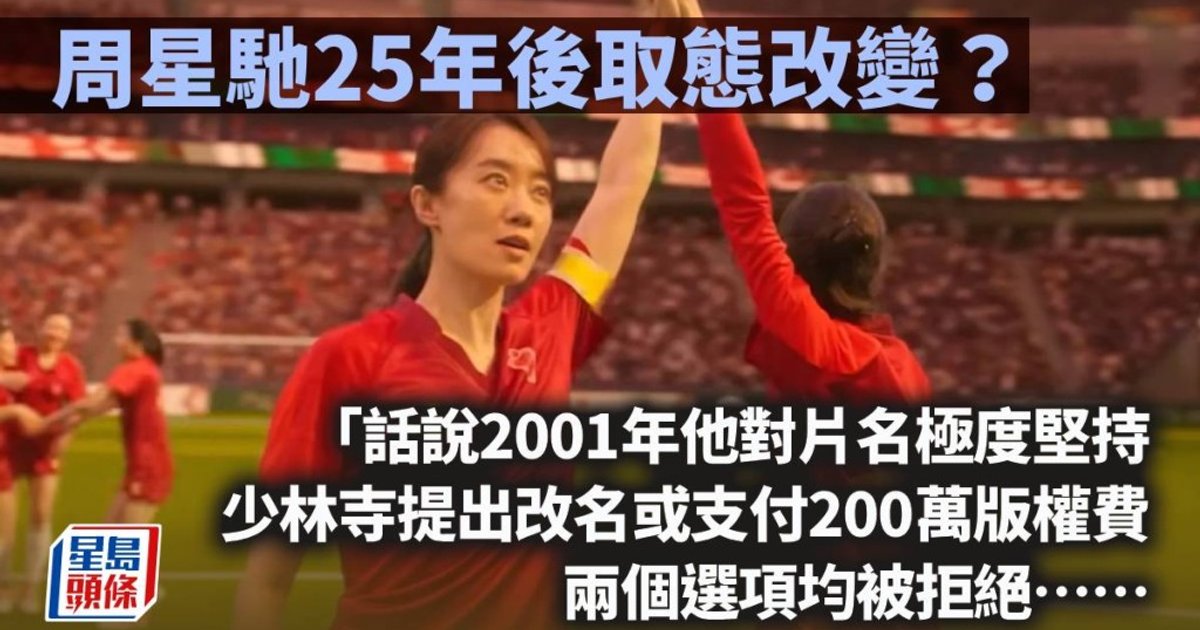
Stephen Chow's latest directorial project, originally titled "Shaolin Women's Football," has been renamed "Kung Fu Women's Football" due to copyright restrictions on the "Shaolin" characters. The change echoes a similar controversy from 2001 when "Shaolin Soccer" failed to secure mainland China release because of trademark disputes with the Shaolin Temple. The filmmaker previously held an uncompromising stance on the title, rejecting both renaming and a 2 million yuan licensing fee. Now, a columnist contends Chow prioritized his own financial interests over those of his previous investors.
Key Points
- The original title "Shaolin Women's Football" was changed because the Shaolin Temple holds copyright to the two characters, making commercial use without authorisation potentially infringing
- "Shaolin Soccer" (2001) never reached mainland China theatres, costing investors hundreds of millions in lost ticket sales due to the naming dispute
- Chow's contract with investor Universe Pictures granted him personal ownership of all copyrights, including the film title "Shaolin Soccer"
- The Shaolin Temple offered two options: rename the film or pay 2 million yuan; both were rejected by Chow in 2001
- Lin Xiaoming, boss of Universe Pictures, later produced a TV drama "Kung Fu Soccer" starring Zhang Wei Jian as his acting debut
Why It Matters
The apparent double standard raises questions about Chow's treatment of business partners across different eras. If Chow genuinely valued artistic integrity above money in 2001, critics ask why he now yielded for financial gain on his own project. The controversy also underscores the ongoing tension between intellectual property rights and creative freedom in China's film industry.
The apparent double standard raises questions about Chow's treatment of business partners across different eras. If Chow genuinely valued artistic integrity above money in 2001, critics ask why he now yielded for financial gain on his own project. The controversy also underscores the ongoing tension between intellectual property rights and creative freedom in China's film industry.